

Introduction
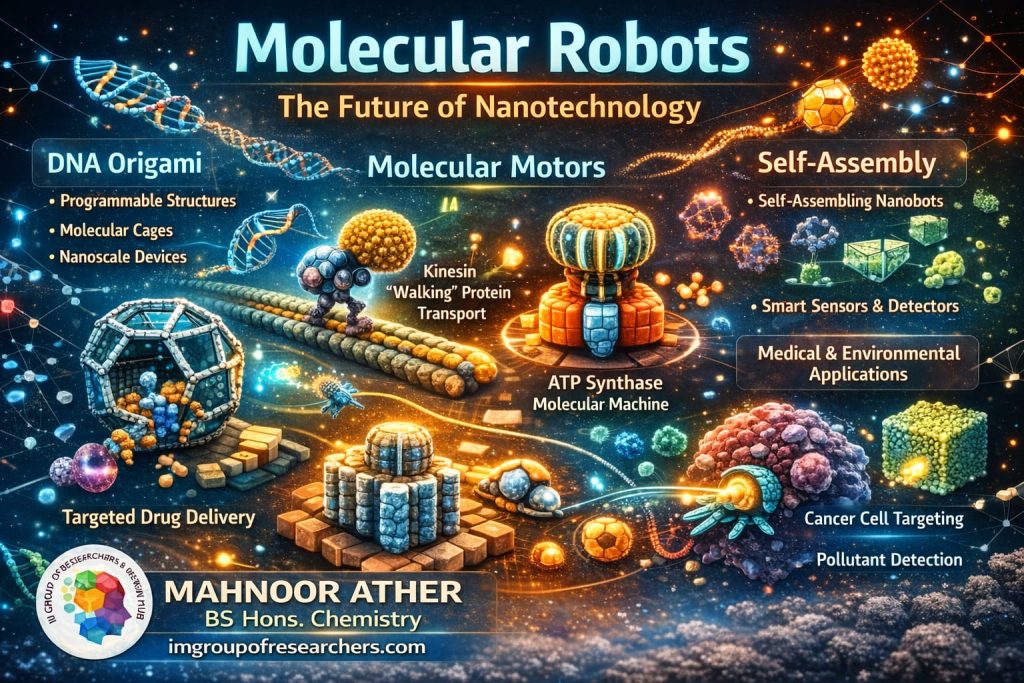
When most people think of robots, they imagine large metallic machines powered by electronics and mechanical parts. But modern science is exploring something far more fascinating and much smaller. Researchers are now working on molecular robots built from molecules such as DNA, proteins, and specially designed chemical structures.
This emerging field lies at the intersection of nanotechnology, chemistry, and molecular engineering. Scientists are developing nanoscale systems that can move, respond to signals, and perform preprogrammed tasks. These tiny systems, often called nanomachines or molecular robots, are redefining what we consider a machine.
Molecular Motors: Nature’s Inspiration
Inside every living cell, there are natural molecular machines that perform essential functions with remarkable precision. These biological systems organize cellular structures, transport materials, and generate energy.
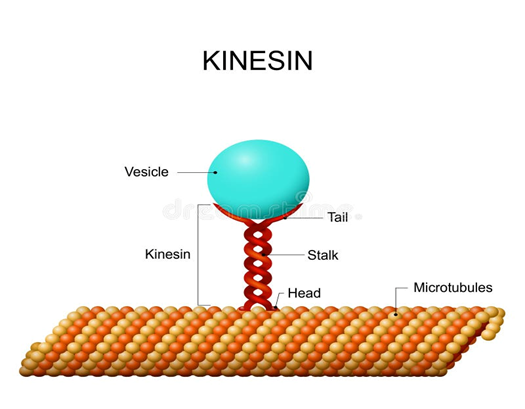
One well-known example is kinesin, a protein that “walks” along microscopic tracks called microtubules. It carries molecular cargo such as nutrients and vesicles across the cell. Each step is powered by ATP, the energy currency of the cell.
Another extraordinary example is ATP synthase, often described as one of the smallest rotary motors in nature. Located in cell membranes, it rotates like a turbine and produces ATP, which fuels nearly all biological processes.
These natural systems prove that efficient machinery can exist at the molecular scale. Inspired by them, scientists have developed synthetic molecular motors that respond to external stimuli such as light, electrical signals, or chemical changes.
For instance, some artificial molecules can bend in one direction under ultraviolet light and return to their original shape under visible light. These reversible changes act like tiny mechanical switches, mimicking real machine behavior.
The significance of this work was recognized globally when the Nobel Prize in Chemistry 2016 was awarded for the development of molecular machines.
DNA Origami: Programming Matter at the Nanoscale
One of the most innovative tools in molecular robotics is DNA origami. This technique allows scientists to fold DNA into precise nanoscale shapes and structures.
While DNA is best known as the carrier of genetic information, it also has a predictable ability to pair with complementary strands. Researchers use this property to design DNA sequences that self-assemble into complex structures.
In DNA origami, a long DNA strand acts as a scaffold, while hundreds of shorter strands, called staple strands, bind to specific regions. This forces the DNA to fold into desired shapes such as cages, boxes, tubes, and even tiny mechanical devices.
Scientists have successfully created:
- Molecular containers for drug delivery
- Hinged structures that open and close
- Nanoscale switches and gears
- Programmable molecular cages
In one remarkable experiment, researchers designed a DNA nanorobot that remains closed until it detects specific chemical markers on cancer cells. Once it recognizes these signals, it opens and releases its therapeutic payload.
This ability to design and control molecular behavior highlights one of the most powerful aspects of nanotechnology.
Self-Assembly: Letting Molecules Build Themselves
Self-assembly is a fundamental concept in molecular robotics. Unlike traditional engineering, where machines are built piece by piece, molecules can naturally organize themselves into structured systems.
This process is driven by interactions such as:
- Hydrogen bonding
- Electrostatic forces
- Van der Waals interactions
- Hydrophobic effects
By carefully designing molecular structures, scientists can control how these interactions occur, guiding molecules to assemble into functional systems.
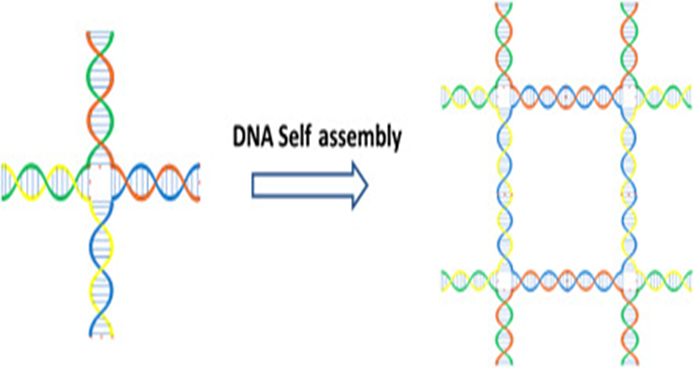
Nature already uses self-assembly extensively. For example, viruses form their protective shells by automatically arranging protein building blocks into highly organized structures.
Researchers are now applying the same principles to create programmable nanostructures. Some of these systems can even change their shape or behavior in response to environmental conditions like temperature, pH, or chemical signals.
This adaptability makes molecular robots far more dynamic than traditional machines.
Molecular Robots in Medicine and Chemical Sensing
One of the most promising applications of molecular robots is in medicine. Traditional drugs often affect both healthy and diseased cells, leading to unwanted side effects. Molecular robots could change this by enabling highly targeted treatments.
For example, a nanorobot can carry a drug within a protective structure as it travels through the bloodstream. When it encounters a specific molecular marker, such as a protein associated with cancer, it releases the drug precisely at the target site.
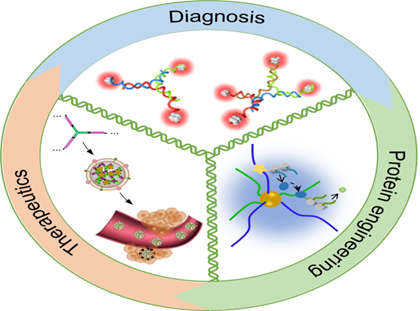
In addition to drug delivery, scientists are developing DNA-based nanosensors capable of detecting extremely small amounts of biological molecules. These sensors could identify disease markers long before symptoms appear.
Beyond healthcare, molecular robots can also be used for environmental monitoring. Their sensitivity at the molecular level allows them to detect pollutants and toxins even in trace amounts, making them valuable tools for chemical sensing.
Why Molecular Robotics Is So Fascinating
Molecular robotics challenges traditional ideas of engineering. Instead of using metal and mechanical parts, it relies on chemistry as the foundation of machine design.
What makes this field unique is the combination of structure and information. Molecules not only form physical systems but also carry instructions that determine how those systems behave.
Researchers are continuously finding new ways to integrate synthetic chemistry, DNA nanotechnology, and molecular motors into systems that behave like programmable machines.
Although these robots are invisible to the human eye, their potential is enormous. They represent a future where molecules themselves function as intelligent tools.
Conclusion
Nanotechnology is transforming the concept of machines by enabling the creation of molecular robots from DNA, proteins, and synthetic molecules. These nanoscale systems operate through chemical interactions, structural changes, and self-assembly rather than traditional mechanical components.
Inspired by natural molecular motors, scientists are designing programmable nanostructures capable of sensing signals, transporting molecules, and performing precise tasks in biological environments. Techniques like DNA origami demonstrate how matter itself can be engineered into functional systems.
Molecular robotics is still developing, but it holds the potential to revolutionize medicine, environmental monitoring, and advanced materials. What once seemed like science fiction is rapidly becoming a reality through the power of nanotechnology.
Editor: Ayesha Noor