


Table of Contents
- Introduction
- What Is Carbon Capture
- Major Carbon Capture Methods
3.1 Pre-Combustion Carbon Capture
3.2 Post-Combustion Carbon Capture
3.3 Oxy-Fuel Combustion
3.4 Adsorption Using Advanced Materials
3.5 Bioenergy with Carbon Capture and Storage - Biological and Nature-Based Approaches
- Challenges and Future Perspectives
- Conclusion
- References
1. Introduction
Climate change is no longer a distant concern; it is a measurable global challenge. Rising global temperatures, melting glaciers, extreme weather events, and biodiversity loss are strongly linked to the increasing concentration of carbon dioxide (CO₂) in the atmosphere. Human activities such as fossil fuel combustion, industrial production, and deforestation have significantly elevated atmospheric CO₂ levels, accelerating global warming.
To mitigate these impacts, researchers and policymakers are focusing on scalable and science-based climate solutions. Among the most important of these solutions are carbon capture technologies. These technologies aim to prevent carbon dioxide emissions from entering the atmosphere or to remove CO₂ after it has already been released. They are central to achieving net-zero emission targets and stabilizing global climate systems.

2. What Is Carbon Capture
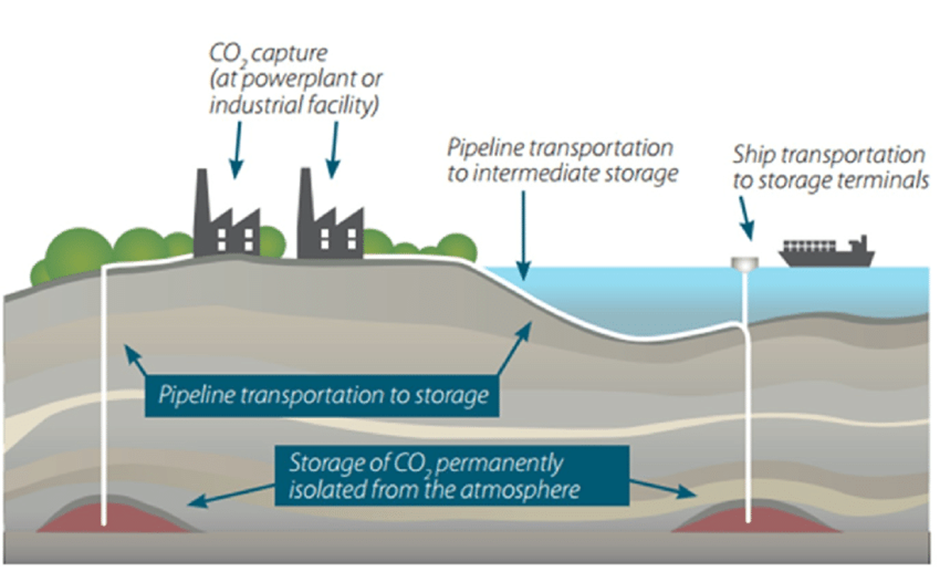
Carbon capture refers to a group of technologies designed to capture carbon dioxide either at emission sources or directly from the air.
Capture at source occurs in facilities such as power plants, cement factories, and refineries, where CO₂ is separated from industrial exhaust gases. Direct Air Capture systems, on the other hand, remove CO₂ directly from ambient air.
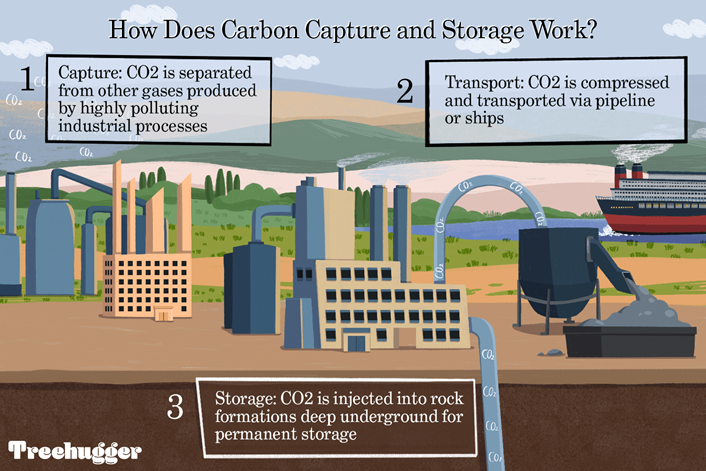
Once captured, carbon dioxide can be stored permanently in deep geological formations, utilized in the production of fuels and chemicals, incorporated into building materials, or stabilized in soil and solid carbon forms. Together, these processes are known as Carbon Capture, Utilization, and Storage, often abbreviated as CCUS.
3. Major Carbon Capture Methods
3.1 Pre-Combustion Carbon Capture
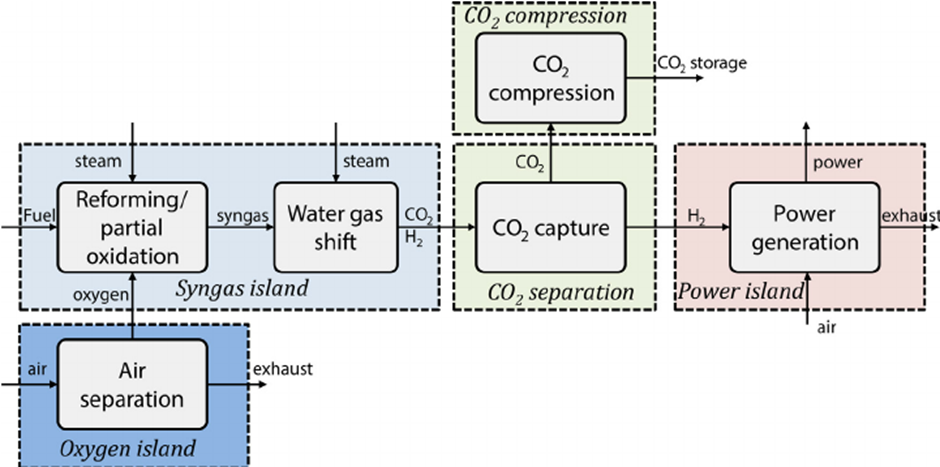
Pre-combustion carbon capture removes carbon dioxide before fuel combustion. Fossil fuels or biomass are first converted into synthesis gas, which mainly contains hydrogen and carbon dioxide. The CO₂ is separated, and hydrogen is used as a cleaner energy source.
This method is commonly implemented in integrated gasification combined cycle systems. It offers high capture efficiency and supports the development of hydrogen-based energy systems with reduced emissions.
3.2 Post-Combustion Carbon Capture
Post-combustion carbon capture separates CO₂ from flue gases after fuel has been burned. This method relies on chemical absorption using amine-based solvents, physical adsorption using solid sorbents, or membrane separation technologies.
One of its main advantages is that it can be retrofitted to existing industrial facilities. This makes it a practical and transitional strategy for reducing emissions while renewable energy infrastructure continues to expand.
3.3 Oxy-Fuel Combustion
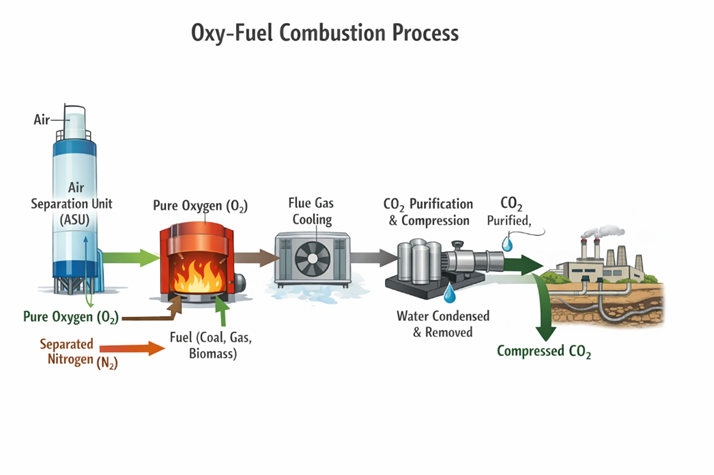
In oxy-fuel combustion, fuel is burned in nearly pure oxygen rather than air. Because nitrogen is removed from the combustion process, the exhaust gas consists primarily of carbon dioxide and water vapor.
After water condensation, a concentrated stream of CO₂ is obtained, which simplifies capture and purification. Although oxygen production requires additional energy, the efficiency of carbon dioxide separation makes this method suitable for large-scale industrial applications.
3.4 Adsorption Using Advanced Materials
Recent advancements in materials science have significantly improved adsorption-based carbon capture technologies. Porous materials such as activated carbon, metal organic frameworks, zeolites, and biomass-derived carbons can selectively capture CO₂ molecules due to their high surface area and tailored pore structures.
Activated carbon derived from biomass has demonstrated strong performance and sustainability advantages in carbon capture applications, as highlighted by Kundu et al. (2024). Similarly, emerging porous materials are being studied extensively for industrial-scale capture and direct air capture systems, offering promising results in efficiency and selectivity, as reported in Materials Today: Energy (2024).
These materials represent an important step toward more energy-efficient and scalable carbon capture systems.
3.5 Bioenergy with Carbon Capture and Storage
Bioenergy with Carbon Capture and Storage combines biomass-based energy production with carbon dioxide capture. Because plants naturally absorb CO₂ during growth, capturing emissions from biomass combustion can result in net-negative emissions.
This means that more carbon dioxide is removed from the atmosphere than is released during the process. Bioenergy with Carbon Capture and Storage is considered a potentially powerful long-term climate mitigation strategy when implemented responsibly and supported by appropriate regulatory frameworks, as described by Wikipedia contributors (2024).
4. Biological and Nature-Based Approaches
In addition to engineered technologies, natural systems provide effective carbon capture solutions. Afforestation and reforestation initiatives increase forest cover and enhance natural carbon sinks. Soil carbon sequestration practices improve both carbon storage and soil fertility.
Biochar and hydrochar applications are gaining increasing attention for their ability to stabilize carbon in soils and construction materials. Hydrochar, produced through hydrothermal carbonization of wet biomass, has demonstrated potential in wastewater treatment and carbon dioxide adsorption, as discussed by Jalilian and Bissessur (2024).
These approaches offer additional environmental benefits, including improved soil health, enhanced biodiversity, and increased agricultural productivity.
5. Challenges and Future Perspectives
Despite their strong potential, carbon capture technologies face several challenges. High capital investment and operational costs remain significant barriers. Many capture processes require substantial energy input, which can reduce overall efficiency if not integrated with low-carbon energy sources.
There is also limited infrastructure for carbon dioxide transport and long-term storage in many regions. Furthermore, strong regulatory frameworks, financial incentives, and international cooperation are essential to accelerate large-scale deployment.
Ongoing research continues to improve material performance, reduce energy requirements, and integrate carbon capture systems with renewable energy technologies.
6. Conclusion
Carbon capture technologies represent an essential component of global climate mitigation strategies. From pre-combustion and post-combustion systems to advanced adsorption materials and biological approaches such as biochar and hydrochar, a diverse portfolio of solutions is emerging.
While no single technology can resolve climate change independently, coordinated innovation, effective policy implementation, and sustained research investment can collectively support the transition toward a cleaner and more resilient future.
7. References
Kundu, S., Khandaker, T., Rashid, M. M., et al. (2024). A comprehensive review of enhanced CO₂ capture using activated carbon derived from biomass feedstock. RSC Advances, 14, 29693 to 29736. https://doi.org/10.1039/D4RA04537H
A comprehensive review on carbon capturing materials and processes for sustainable development. (2024). Materials Today: Energy, 48, 101783. https://doi.org/10.1016/j.mtener.2024.101783
Jalilian, M., Bissessur, R., Ahmed, M., Hsiao, A., He, Q. S., & Hu, Y. (2024). A review: Hydrochar as potential adsorbents for wastewater treatment and adsorption. Science of the Total Environment, 914, 169823. https://doi.org/10.1016/j.scitotenv.2023.169823
Wikipedia contributors. (2024). Bioenergy with carbon capture and storage. Wikipedia.
Editor: Ayesha Noor