

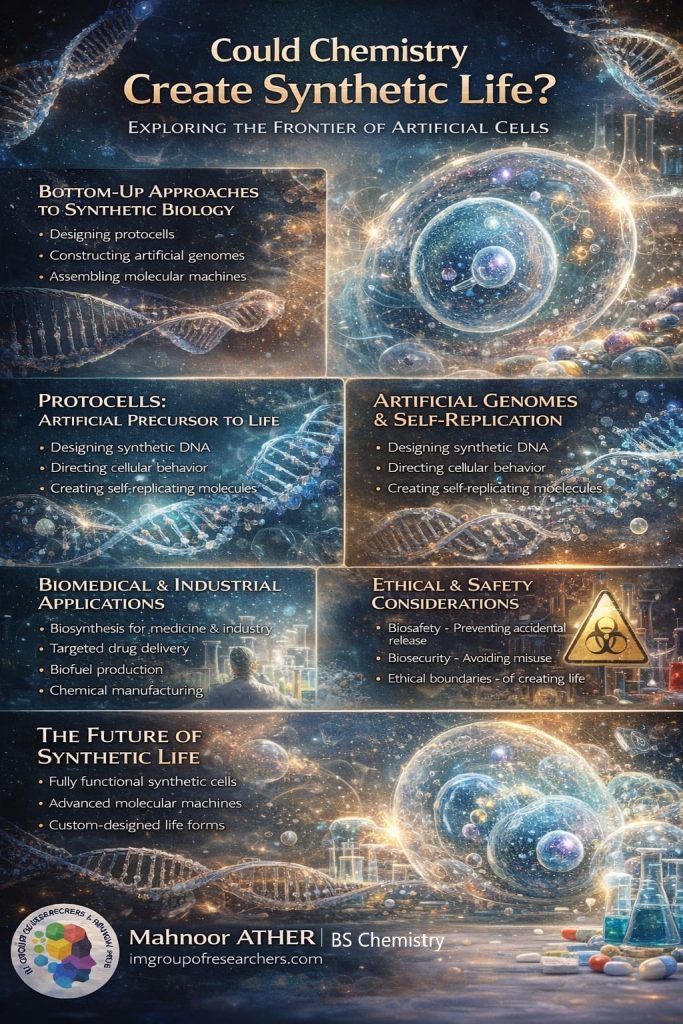
Exploring the Frontier of Artificial Cells
The idea of creating life in a laboratory once existed only in science fiction. Today, rapid progress in nanotechnology research and synthetic biology is bringing that possibility closer to reality. Scientists are no longer debating whether life-like systems can be created, but rather how far chemistry can go in reconstructing the essential features of living organisms.
At the center of this exploration lies a powerful question: can chemistry alone create synthetic life? By combining principles of chemistry, biology, and nano engineering, researchers are developing systems that mimic the behavior of living cells, opening new frontiers in science and technology.
Understanding Synthetic Life
Synthetic life refers to artificially designed systems that replicate the fundamental characteristics of living organisms. These include metabolism, growth, responsiveness to environmental signals, and the ability to reproduce.
Unlike genetically modified organisms, which are altered versions of existing life forms, synthetic life is built entirely from non-living components. This makes it a key area of research within DNA nanotechnology, molecular robotics, and smart materials.
Chemistry plays a central role in this process. By controlling chemical interactions, scientists attempt to recreate the complex reaction networks that define life within controlled laboratory environments.
Bottom Up Approaches in Synthetic Biology
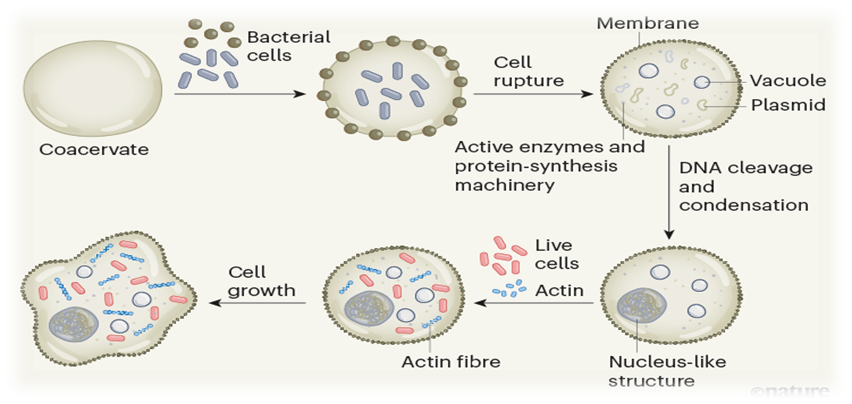
One of the most promising strategies for creating synthetic life is the bottom up approach. Instead of modifying existing cells, scientists start with simple molecules and gradually assemble them into complex systems.
This approach involves:
- Designing lipid membranes to form cell-like compartments
- Using enzymes and proteins to drive essential biochemical reactions
- Creating systems capable of producing energy and transporting molecules
The ultimate goal is to build a minimal cell, a simplified version of life containing only the essential components required for survival and replication. Studying these systems helps scientists understand the true nature of life.
Protocells: The First Step Toward Artificial Life
Protocells are among the most important milestones in synthetic biology. These are simple, non-living structures that resemble biological cells and exhibit certain life-like properties.
Typically, protocells include:
- A lipid membrane that encloses the system
- Internal chemical reactions that mimic metabolism
- Basic molecules capable of storing information
Although protocells are not fully alive, they demonstrate that life-like behavior can emerge from carefully designed chemical systems. This makes them a crucial step toward creating true synthetic life.
Molecular Programming and Artificial Genomes
Another major breakthrough in this field is the development of artificial genomes. Scientists can now design and synthesize entire DNA sequences in laboratories and insert them into cells to control their behavior.
This advancement allows researchers to:
- Program cells to perform specific functions
- Design organisms with tailored metabolic pathways
- Study the fundamental principles of genetics
In parallel, molecular programming enables the creation of self-assembling systems. These systems organize themselves into functional structures based on chemical rules, closely linking this field to smart materials and molecular robotics.
Molecular Machines and Self Replication
Self-replication is one of the defining features of life. Scientists are now developing molecular systems capable of copying themselves under suitable conditions.
These molecular machines:
- Operate at the nanoscale
- Use chemical energy to perform tasks
- Show dynamic and adaptive behavior
This research connects directly with molecular robotics, where scientists aim to create programmable systems that can function autonomously.
Biomedical Applications of Synthetic Life
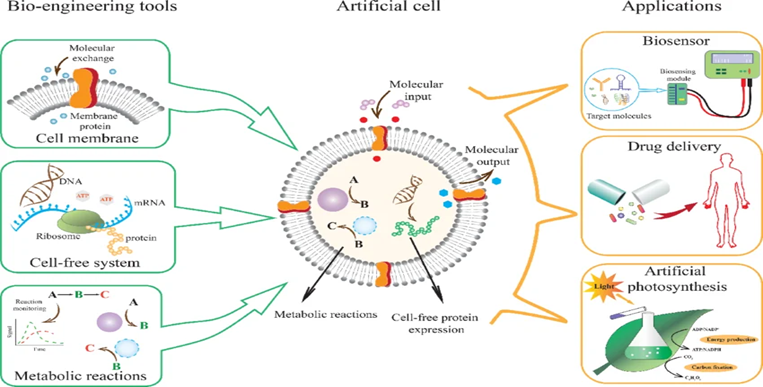
Synthetic life has the potential to transform the future of medicine. Engineered cells and molecular systems can offer more precise and effective healthcare solutions.
Key applications include:
- Targeted drug delivery that minimizes damage to healthy tissues
- Regenerative medicine for repairing or replacing damaged organs
- Disease modeling for faster and more accurate drug discovery
In addition, chemical sensors based on synthetic systems could detect diseases at very early stages, significantly improving diagnosis and treatment outcomes.
Industrial and Environmental Applications
Beyond healthcare, synthetic life offers promising solutions for industrial and environmental challenges.
These include:
- Biofuel production using engineered organisms for sustainable energy
- Biodegradation systems that break down pollutants and plastic waste
- Environmentally friendly chemical manufacturing processes
These innovations highlight the role of nano engineering and smart materials in building a more sustainable future.
Ethical and Safety Considerations
Despite its potential, the creation of synthetic life raises important ethical and safety concerns.
Key issues include:
- Biosafety to prevent accidental release of artificial organisms
- Biosecurity to avoid misuse of advanced technologies
- Ethical questions about the creation and definition of life
To address these concerns, strong regulatory frameworks and responsible research practices are essential.
The Future of Synthetic Life
The development of synthetic life is still in progress, but the advancements achieved so far are remarkable. From protocells to artificial genomes, each breakthrough brings scientists closer to understanding and recreating life.
In the future, we may see:
- Fully functional synthetic cells capable of independent survival
- Advanced molecular robotics systems that mimic natural biological processes
- Custom-designed life forms created for specific human needs
These possibilities demonstrate how chemistry and nanotechnology research are reshaping the boundaries of life itself.
Conclusion
Chemistry has already proven its ability to replicate many aspects of life, including cellular structures and genetic systems. Although creating fully synthetic life remains a complex challenge, the foundation has been firmly established.
By integrating chemistry, biology, and nano engineering, scientists are uncovering the principles that govern life. The question is no longer whether synthetic life can be created, but how it will be used responsibly.
With continued research and ethical consideration, synthetic life could become one of the most transformative scientific breakthroughs of our time.
References
Pohorille, A., & Deamer, D. (2002). Artificial cells: Prospects for biotechnology. Trends in Biotechnology, 20(3), 123–128.
Ivanov, I., Castellanos, S. L., Balasbas III, S., Otrin, L., Marušič, N., Vidaković-Koch, T., & Sundmacher, K. (2021). Bottom-up synthesis of artificial cells: Recent highlights and future challenges. Annual Review of Chemical and Biomolecular Engineering, 12, 287–308.
Bedau, M. A., & Triant, M. (2014). Social and ethical implications of creating artificial cells. In Ethics and Emerging Technologies (pp. 562–574). London: Palgrave Macmillan.
Editor: Ayesha Noor