

Introduction
Direct Air Capture (DAC) is an innovative technology that removes CO₂ directly from the atmosphere at very low concentrations (~0.04%). The efficiency and cost of DAC are highly influenced by the materials used for CO₂ adsorption. Advanced nano-adsorbents such as Metal-Organic Frameworks (MOFs), graphene, magnetic nanoparticles, and amine-functionalized silica provide large pore sizes, tunable composition, and high specificity for CO₂ capture. Ongoing advancements in composite materials and AI-assisted engineering are accelerating DAC development despite challenges such as moisture sensitivity, energy requirements, adaptability, and complexity.
Environmental degradation is now a reality. Extreme weather events, melting ice caps, rising global temperatures, and increasing greenhouse gas concentrations necessitate immediate solutions. While reducing emissions is critical, it is insufficient alone. The removal of existing CO₂ from the atmosphere is equally important, which is where DAC technology becomes transformative. Nano-adsorbents represent some of the latest strategies under investigation for efficient and long-term carbon capture. Their large surface area, tunable chemical properties, and excellent adsorption capacity make them ideal for removing CO₂ from the air.
Understanding Direct Air Capture (DAC)
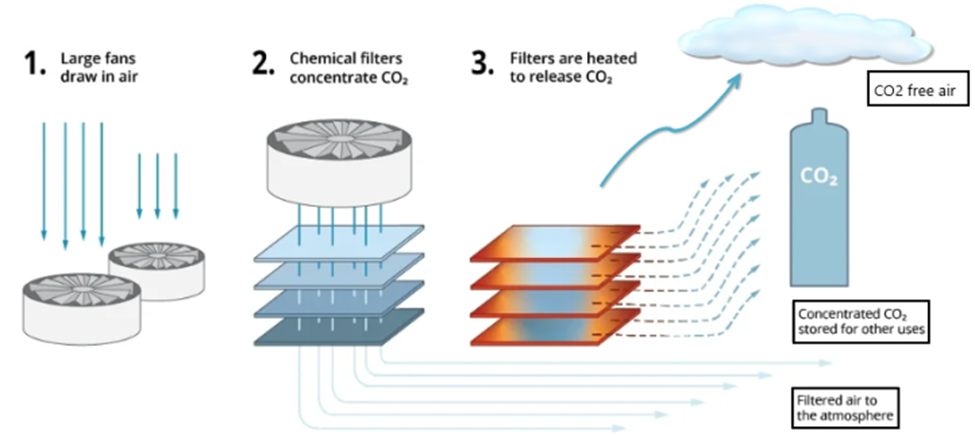
DAC refers to technologies that extract atmospheric CO₂ directly, as opposed to capturing emissions at industrial sources. Operating at very low CO₂ concentrations (~0.04%), DAC requires nanomaterials with high specificity and efficiency to capture diluted CO₂ effectively.
Currently, small-scale DAC units are operational, managed by companies like Climeworks and Carbon Engineering. Despite proven feasibility, DAC remains energy-intensive and costly, primarily due to the specialized porous materials used for CO₂ adsorption. Therefore, the development of advanced nano-adsorbents is essential for the economic sustainability of DAC systems.
Why Nano-Adsorbents?
Nano-adsorbents are materials engineered at the nanoscale (1–100 nm) that possess unique physical and chemical properties, such as:
• Particularly wide surface area-to-volume ratio
• High potential for CO₂ adsorption
• Efficient adsorption–desorption kinetics
• Tunable pore frameworks
• Enhanced selectivity for CO₂
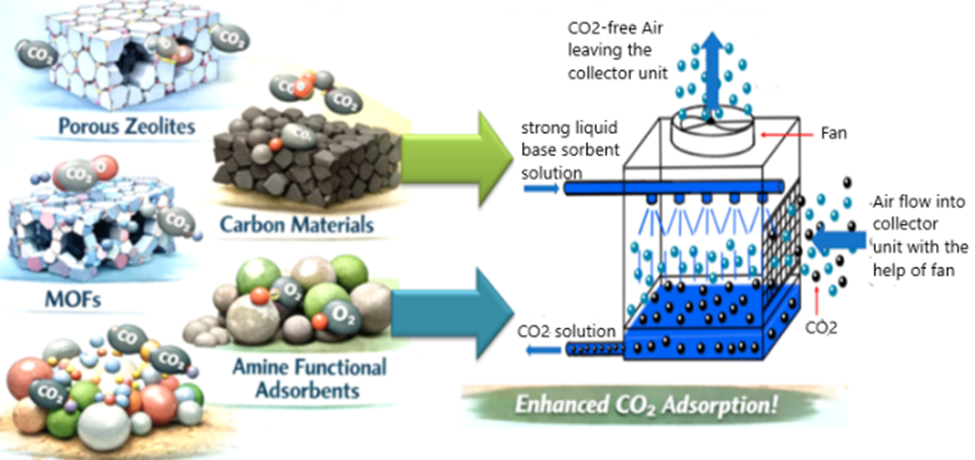
Since DAC operates at very low CO₂ concentrations, nanomaterials must selectively bind CO₂ while ignoring other atmospheric components like nitrogen, oxygen, and water vapor. This precision can be achieved through chemical functionalization.
Types of Next-Generation Nano-Adsorbents
To enhance carbon capture performance at low CO₂ concentrations, researchers are focusing on advanced nano-engineered materials. The following categories represent the most promising next-generation nano-adsorbents for Direct Air Capture systems.
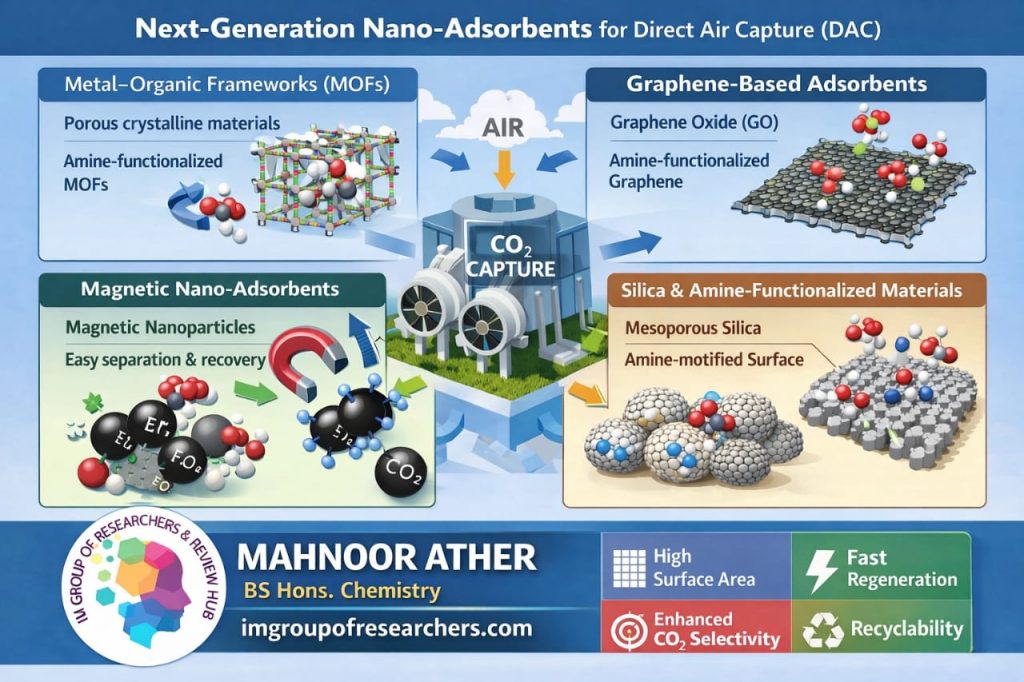
Metal-Organic Frameworks (MOFs)
MOFs are highly porous crystalline structures composed of metal ions and organic linkers. Their most significant advantage is flexibility, allowing customization of functional groups and pore sizes to suit DAC applications.
• MOFs show exceptionally strong CO₂ adsorption even at very low atmospheric pressures
• Amine-functionalized MOFs chemically bind CO₂ to enhance selectivity
Challenges:
- Stability in humid environments
- Expensive synthesis
- Scale-up and manufacturing limitations
Despite these challenges, MOFs remain a leading focus in DAC material research.
Graphene-Based Nano-Adsorbents
Graphene and graphene oxide are gaining attention due to:
• Thermal and chemical stability
• Mechanical rigidity
• High surface area
Amine functionalization enhances CO₂ adsorption efficiency, while graphene hybrids improve regeneration efficiency and thermal durability. Graphene-based adsorbents show promise for adaptable and cost-effective DAC systems.
Magnetic Nano-Adsorbents
Magnetic nanoparticles, such as iron oxide-based composites, offer a unique advantage in ease of recovery. After adsorption, a magnetic field can efficiently reclaim the material, increasing recycling potential and reducing operational complexity. Coatings with metals further enhance adsorption efficiency and selectivity, making them attractive for industrial applications.
Amine-Functionalized Silica Nanomaterials
Mesoporous silica nanoparticles functionalized with amine groups demonstrate excellent CO₂ binding due to:
• Optimized pore dimensions
• Chemical stability
• Versatility
The reaction between CO₂ and amine groups forms carbamate species, improving adsorption efficiency under low-concentration DAC conditions.
Key Challenges in Nano-Adsorbent-Based DAC
i. Atmospheric CO₂ exists at only 420 ppm, making effective capture difficult
ii. CO₂ competes with humidity for adsorption sites, reducing efficiency
iii. Post-adsorption CO₂ release requires energy-intensive processes, affecting regeneration efficiency
iv. Materials must withstand multiple adsorption–desorption cycles without structural degradation
Integration with Carbon Storage and Utilization
Captured CO₂ must either be stored safely or converted into useful products. Some companies, such as Climeworks, partner with geological storage projects to transform CO₂ into stable mineral forms. Other approaches include conversion into fuels, chemicals, or building materials. Nano-adsorbents can be integrated with catalytic systems to enable simultaneous capture and utilization.
Emerging Innovations and Future Directions
AI-Guided Material Design
AI and computational modeling accelerate nano-adsorbent discovery, predicting optimal pore shapes and functional groups, reducing experimental costs and timelines.
Bio-Inspired Nano-Adsorbents
Researchers are developing nanoparticles inspired by photosynthetic enzymes, which selectively capture CO₂. Bio-derived nano-adsorbents are also being explored as environmentally friendly alternatives.
Integrated Materials
Combining MOFs, graphene, and metallic nanoparticles in hybrid structures provides:
• High adsorption efficiency
• Structural stability
• Easy regeneration
• Enhanced recyclability
Hybrid nano-adsorbents represent a promising path for next-generation DAC systems.
Energy-Efficient Regeneration Technologies
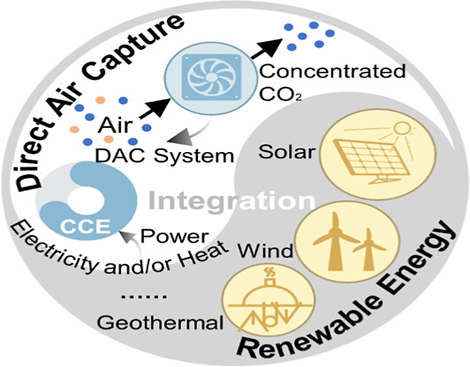
Techniques like hydraulic oscillation, electrostatic adsorption, and microwave heating are being investigated to reduce the energy required for CO₂ desorption. Combining these methods with renewable energy can further improve system sustainability.
Conclusion
Next-generation nano-adsorbents are key to enhancing DAC efficiency. Despite low atmospheric CO₂ concentrations, materials such as MOFs, graphene, metallic nanoparticles, and amine-functionalized silica can selectively capture and retain carbon. Challenges remain in manufacturing, durability, regeneration energy, and moisture sensitivity. Scaling these technologies is crucial for achieving global net-zero targets and building a sustainable, carbon-neutral future.
References
Bisotti, F., Hoff, K. A., Mathisen, A., & Hovland, J. (2024). Direct air capture (DAC) deployment: A review of the industrial deployment. Chemical Engineering Science, 283, 119416.
Li, L., Xiao, Z., Xu, C., Zhou, Y., & Li, Z. (2024). The utility of MOF-based materials in direct air capture (DAC) applications for ppm-level CO₂. Environmental Research, 262, 119985.
Mahidin, Mulana, F., Adisalamun, Annisak, A., Halimatussakdiah, Munawar, E., & Hadi, A. (2025). Development of nanoparticle adsorbents and their prospects for carbon capture: A review. In AIP Conference Proceedings (Vol. 3322, No. 1, Article 070003).
Pedraza, D. A. M. (2018). Amine-functionalized mesoporous silica nanoparticles: A new nanoantibiotic for bone infection treatment. Biomedical Glasses.
Editor: Ayesha Noor