

Author: Izaz Ul Islam
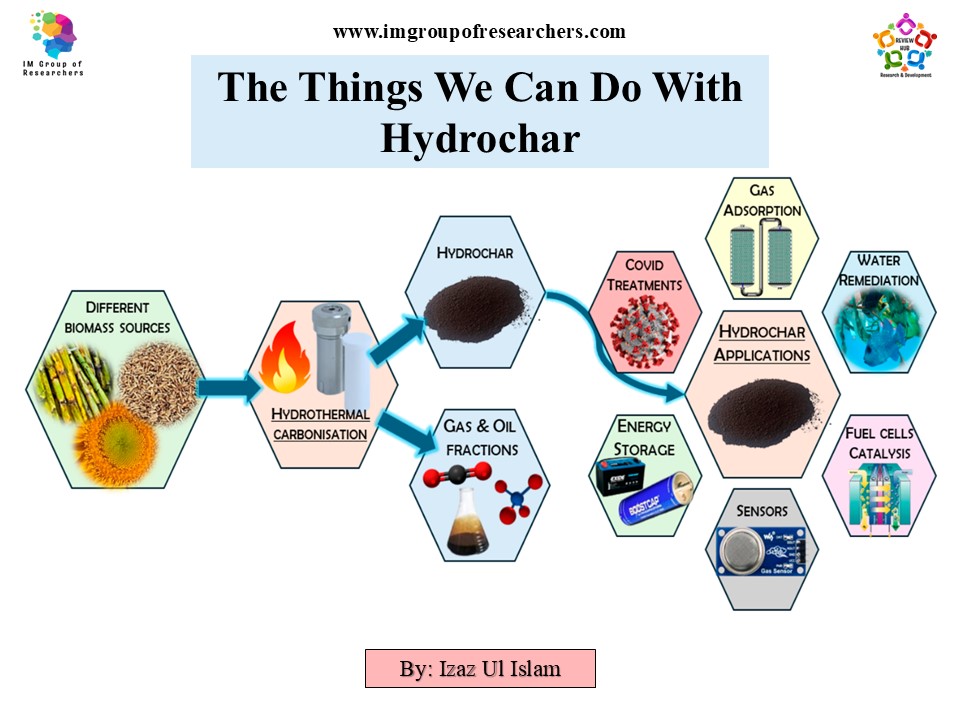
Hydrothermal carbonization uses ubiquitous wet biomass and turns it into a coal-like substance. But what can we do with this substance in order to achieve a carbon neutral or negative economy?
In the last blogs, we discussed inputs (carbon, rather than carbon dioxide) and processes (biochar and hydrochar). The remaining challenge for a carbon‑neutral or carbon‑negative economy is to identify applications for the carbonization products that are economically viable, scalable, and capable of delivering a net reduction in carbon emissions.
Hydrothermal carbonization (HTC) is advantageous in this context because it yields a broad spectrum of products, ranging from a brown coal (lignite) substitute and humus‑like materials to liquid and gaseous fuel precursors.
Long-term and irreversible sequestration
The primary and most urgent objective is to develop economically feasible, scalable, and decentralizable strategies for the permanent removal of carbon. Options include:
- Converting biomass into difficult‑to‑degrade or essentially unassailable forms of elemental carbon.
- Deep geological storage, for example by refilling deep underground mines with HTC‑derived coal, effectively returning carbon to its geological reservoirs.
- Exploiting plant bioaccumulation of toxic substances, followed by conversion to hydrochar and subsequent deep storage, thereby simultaneously sequestering both carbon and contaminants.
Mid-term and reversible sequestration
intensive than partially reversible strategies. Here, “mid‑term” refers to time scales of roughly 50 to a few hundred years, comparable to those used in reforestation programs. Representative approaches include:
- Surface‑level sequestration through refilling open‑pit mines, terraforming and peatland (moor) restoration, and integration into wastewater treatment schemes.
- Farmland rehabilitation by applying biochar as a long‑lasting soil amendment.
- Use of carbonized materials as fillers in construction and as components of substitute building materials (e.g., carbon‑containing concretes).
Carbon-neutral fuel substitutes and other immediate uses
The application of HTC products as biofuels in power plants is likely the best‑known and most thoroughly investigated use case, consistent with the original intent of the Bergius process to generate a coal substitute. Additional technologically relevant uses include:
- Fuel or feedstock in cement production.
- Reductants or energy carriers in metallurgical furnaces (e.g., iron production).
- Feedstock for steam reforming processes to produce hydrogen.
- Upcycling of waste biomass into advanced carbon materials, such as those used in supercapacitors.
In the coming weeks, these use cases will be examined in greater depth. The purpose of this overview is to illustrate that, just as HTC can accommodate a wide variety of feedstocks, its outputs can be directed into a correspondingly wide spectrum of applications, spanning carbon‑neutral to genuinely carbon‑negative pathways.
Despite vigorous research activity, these strategies have not yet achieved broad public visibility. A key step forward would be the implementation of negative carbon credits that move beyond current cap‑and‑trade systems focused on emission allowances. Central to such a framework is robust accounting: reliable tracking of biomass, documented formation of hydrochar, and clearly defined sequestration durations are all essential to generate valid and auditable proofs of carbon removal.
Conclusion
In summary, the power of hydrothermal carbonization lies in its flexibility. It can be tuned to produce the right material for the right use: a stable coal for burial, a soil enhancer for farms, a fuel for industry, or a advanced material for technology. By building an integrated economy around these outputs—underpinned by a trustworthy carbon accounting system—we can transform waste biomass into the foundation of a carbon-negative future.
Read More: The UK Green Guardian: Unlocking Biochar’s Power to Heal Water, Soil, and Forests
Follow Us on