

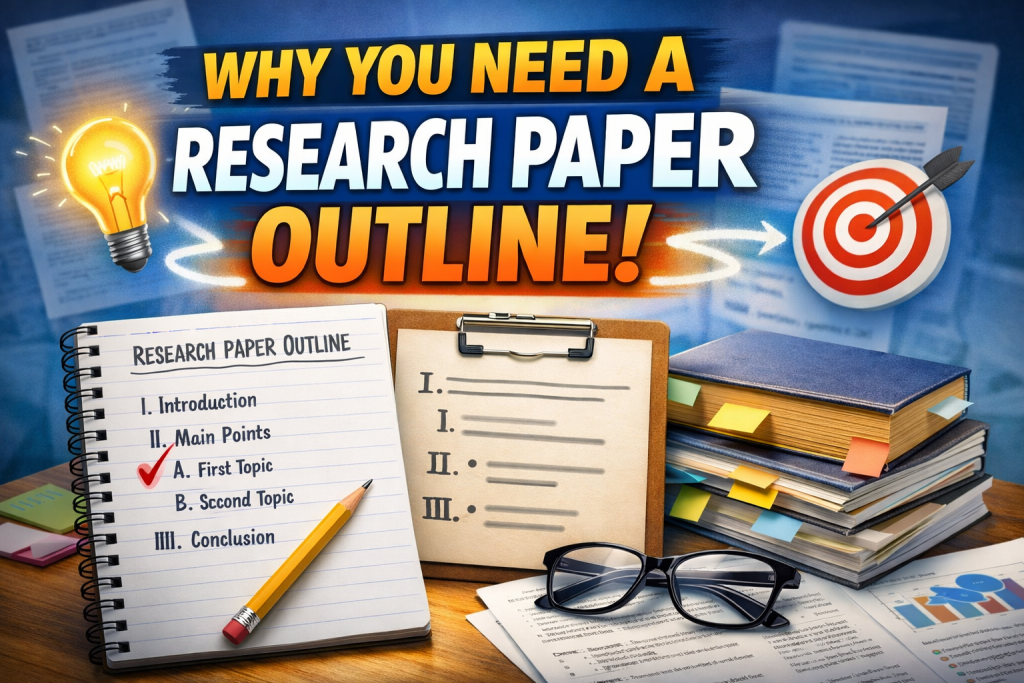
Whether you are a student facing your first assignment or a seasoned writer preparing a thesis or article, a research paper outline is one of the most important tools in your academic toolkit. At first glance it might seem like extra work, but once you grasp its purpose and power, you will wonder how you ever wrote without one.
Table of Contents
ToggleWhy You Need a Research Paper Outline
At its core, a research paper outline is like a roadmap. It organizes your thoughts, structures your research, and keeps your writing focused from the very beginning. Without an outline, it is easy to get lost in the sea of facts and ideas that you gather during research. Think of your sources and notes as a big pile of Lego bricks. Unless you sort them first, you will waste time searching for the right pieces. An outline sorts those pieces so you can build faster and smarter.
This planning step makes drafting smoother, cuts down on rewrites later, and helps ensure you will not forget important content mid-writing.
What Is a Research Paper Outline?
A research paper outline shows you the structure of your paper before you begin writing. It lists all major sections and subsections in order, often with notes indicating what evidence, quotes, or ideas you will include under each heading. Outlines can be brief or detailed depending on your style and the project’s complexity.
Key Benefits of Outlining
Here is what a strong outline helps you do:
- Clarify your thesis and argument. You decide what your paper is about before the first full sentence is written.
- Organize research logically. Sources and evidence get placed in context rather than scattered randomly.
- Identify gaps early. If you do not have enough research to support a section, you can fix that before you write it.
- Save time and reduce edits later. A good structure makes drafting quicker and clearer.
Step-by-Step: How to Create Your Outline
Here is a practical path to building a useful outline:
1. Start With Your Thesis Statement
Your thesis is the backbone of your paper, the core idea you are arguing or explaining. Before you get into details, state your thesis clearly.
2. Gather and Organize Research
Collect all your sources, notes, and quotes. Label them by topic or potential section. This makes it easier to slot them into your outline later.
3. Sketch the Major Sections
At minimum, most outlines follow this basic structure:
- Introduction — background and thesis
- Body Sections — organized points and evidence
- Conclusion — summary and implications
You can add more sections or break the body into multiple parts, especially for research-heavy papers.
4. Choose Your Outline Format
Outlines come in different styles. Pick one that fits your needs:
- Uses Roman numerals, letters, and numbers, which is the most common.
- Full-Sentence. Each point is written in full sentences, ideal when many contributors are involved.
Choose what works best for clarity and flow.
5. Add Supporting Details and Sources
Under each major point, list the evidence, citations, examples, or statistics you plan to include. This helps during writing when you need to know what evidence supports which argument.
6. Review and Revise
Your outline is not set in stone. If during writing you find that one point needs more evidence or a section does not fit your thesis anymore, revise your outline accordingly.
Sample Structure (Simple Version)
Here is how a basic outline might look:
- Introduction
A. Background context
B. Research question or thesis - Literature Review / Key Evidence
A. Theme or topic 1
B. Theme or topic 2 - Main Arguments
A. Sub-argument with sources
B. Sub-argument with sources - Conclusion
A. Summary of findings
B. Implications or future research
You can expand each section with more subsections as needed, especially for long academic papers.
Tips from the Experts
- Keep it flexible: An outline’s purpose is to help you, not constrain you. If ideas evolve, update it.
- Be consistent in formatting: Using the same structure at each level improves clarity.
- Balance detail and simplicity: Too little detail means you will still struggle during writing. Too much can bog you down.
Conclusion
Drafting an outline might feel like preparing more work, but it is an investment. It transforms a vast and potentially chaotic research process into a clear, step-by-step journey that makes writing easier, faster, and more effective. Whether it is a short classroom assignment or your thesis project, thoughtful outlining can greatly enhance your results.