

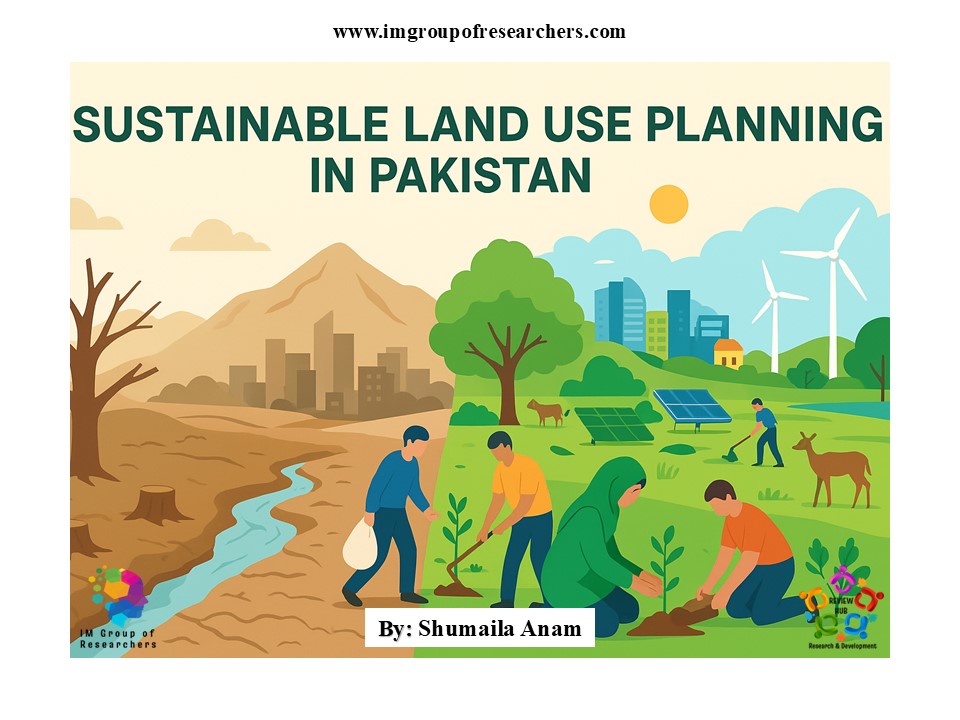
Author: Shumaila Anam
Introduction
Pakistan is a land of rich ecosystems, from lush valleys and fertile plains to dry deserts and coastal zones. These landscapes support diverse natural vegetation that provides food, clean air, water regulation, and wildlife habitats. But rapid population growth, urban expansion, and climate change are threatening this natural wealth. To secure the future, sustainable land use planning in Pakistan has become more important than ever.
What is Sustainable Land Use Planning?
Sustainable land use planning means managing land in a way that balances human needs with environmental health. It ensures that agriculture, housing, industry, and conservation co-exist without destroying ecosystems. The idea is simple: use land wisely today so it remains productive and green for future generations.
Why Pakistan Urgently Needs Land Use Planning
Pakistan faces multiple land-related challenges that put its vegetation at risk:
- Deforestation in Pakistan has reduced forest cover to less than 5% of total land area. Trees are cut for timber, fuel, and farming, leaving land exposed to erosion.
- Urban sprawl is consuming fertile land and natural habitats as cities expand unchecked.
- Soil degradation caused by overgrazing, erosion, and poor farming practices reduces land productivity.
- Climate change has worsened floods, droughts, and heatwaves, damaging vegetation and ecosystems.

- Deforestation and land use changes in Pakistan highlighting the urgent need for sustainable planning.
- Without proper planning, these issues will continue to harm both people and the environment.
How Sustainable Land Use Planning Helps Conserve Natural Vegetation
1. Protecting Forests and Rangelands
Strong zoning laws can stop illegal logging and land grabbing. Community-based projects, like the Billion Tree Tsunami, prove that reforestation efforts can revive natural vegetation when people are involved.

2. Promoting Sustainable Agriculture
- Agroforestry mixes crops with trees, enriching soil and supporting biodiversity.
- Crop rotation and organic methods improve soil health and reduce land degradation.
- Land suitability mapping ensures farming takes place on productive soils rather than fragile ones.
3. Smarter Urban Growth
Cities can adopt green belts, parks, and urban forests to preserve native vegetation. Restricting construction on fertile agricultural land also ensures food security while protecting ecosystems.
4. Watershed and Rangeland Management
Reforestation in catchment areas reduces floods and soil erosion. At the same time, controlled grazing allows pastures to recover, conserving grassland vegetation that supports livestock and biodiversity.
5. Strengthening Laws and Institutions
Pakistan already has policies on land use and climate change. What’s missing is effective enforcement and coordination between government agencies, NGOs, and local communities. Strong institutions are vital to make sustainable land use planning a reality.
Benefits for Pakistan’s Future
Adopting sustainable land use planning brings multiple long-term benefits:
- Conserves biodiversity and protects rare species.
- Restores soil fertility and reduces desertification.
- Reduces disaster risks linked to floods and droughts.
- Improves rural livelihoods by protecting the resources people depend on.
- Supports Pakistan’s climate goals and the United Nations Sustainable Development Goals (SDGs).

Conclusion
Natural vegetation is more than trees and plants it is the foundation of life in Pakistan. With rising population pressures and environmental challenges, ignoring land management is no longer an option. By adopting sustainable land use planning, Pakistan can balance development with conservation. Protecting natural vegetation today means securing food, water, and a healthier environment for tomorrow’s generations.
Read More: Scientific Blog: Photocatalysis A to Z — Insights
Follow Us on