

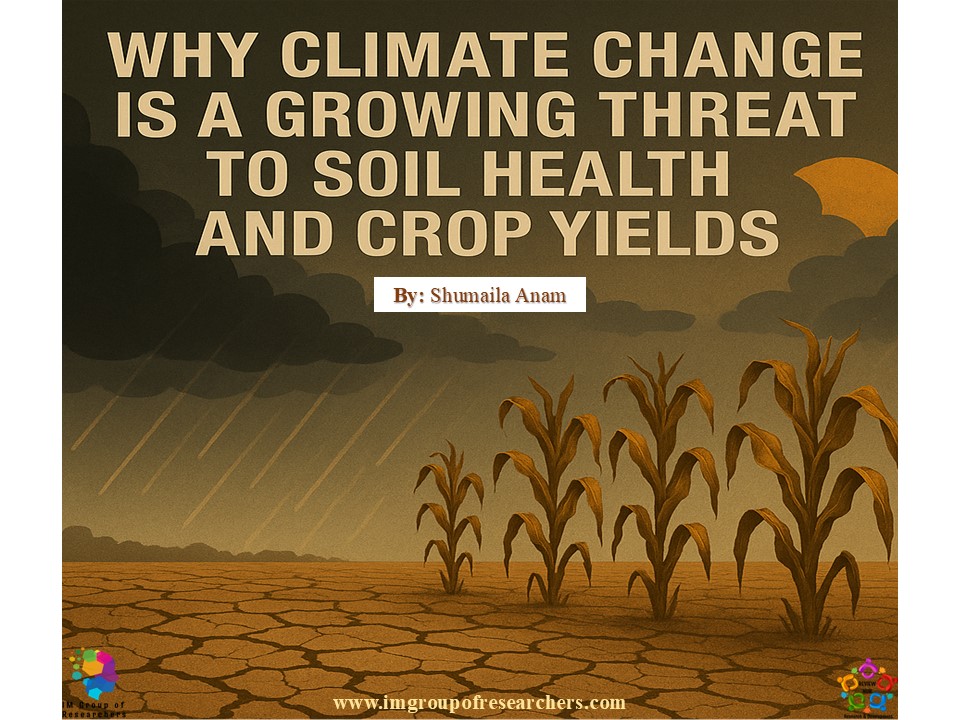
Author: Shumaila Anam
Introduction
Climate change isn’t just about rising sea levels or warming temperatures it’s also affecting something much closer to home: the soil beneath our feet. Soil is the foundation of agriculture. It stores water, recycles nutrients, supports plant growth, and helps control pests and diseases. But as the climate changes, this vital resource is suffering.
In this post, we’ll explore how climate change is threatening soil health and crop yields, and what we can do to protect them both.
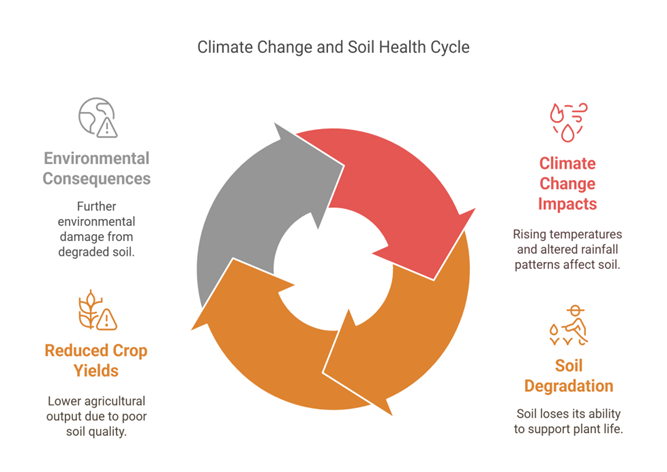
How Climate Change Affects Soil Health
1. Soaring Soil Temperatures
As global temperatures rise, soil gets hotter. This increase in temperature accelerates the breakdown of organic matter, which initially may release nutrients but ultimately leads to soil depletion. Warmer soil disrupts the microbial communities that are vital for healthy crop growth.
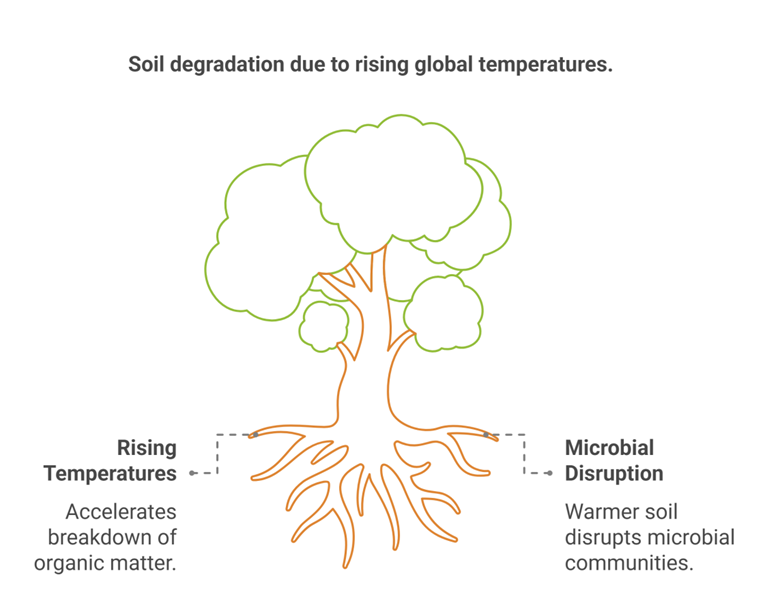
Fun Fact: Microbes play a key role in nutrient cycling. Without them, soil becomes less fertile and more prone to erosion.
2. Erratic Rainfall Patterns
Climate change is altering weather patterns, resulting in heavy storms in some regions and prolonged droughts in others. Sudden downpours can wash away nutrient-rich topsoil, while droughts leave the soil dry, cracked, and lifeless.
Soil erosion not only reduces agricultural productivity but also increases the reliance on synthetic fertilizers, which can further degrade soil health over time.
3. Rising Soil Salinity
In coastal areas, rising sea levels are pushing saltwater into farmland. Additionally, hot and dry climates lead to increased evaporation, leaving behind salt deposits. Salty soil can severely damage root systems and hinder plants’ ability to absorb water, ultimately threatening crop yields and food security.
By understanding these factors, we can better address the challenges posed by climate change and work towards sustainable soil management practices.
How Climate Change Affects Crop Yields
1. Reduced Crop Productivity
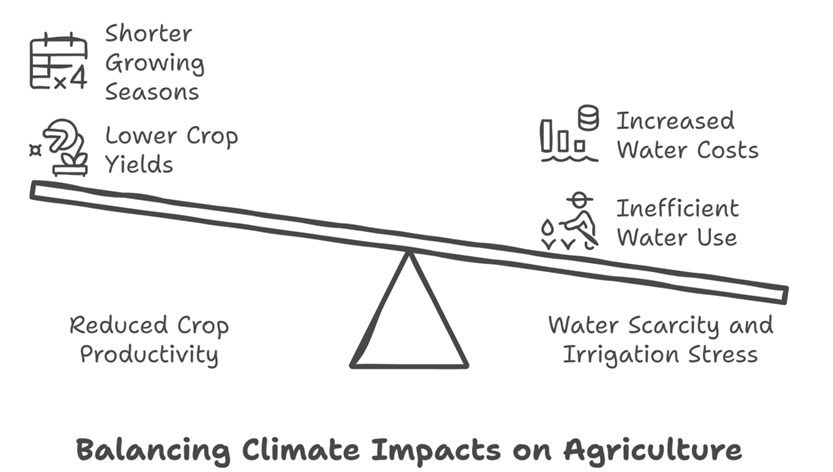
- Unpredictable Weather: Farmers are facing unpredictable weather patterns, resulting in shorter growing seasons and delayed planting.
- Higher Soil Temperatures: Increased temperatures can stress plants and reduce overall productivity.
- Nutrient Loss: Soil degradation leads to nutrient depletion, further lowering crop yields.
2. Increased Pests and Plant Diseases
- Spread of Pests: Warmer climates enable pests to thrive in regions where they were previously absent, increasing the risk to crops.
- Plant Diseases: Higher temperatures and humidity levels can foster the growth of diseases, making crops more vulnerable.
- Increased Pesticide Use: To combat these threats, farmers may resort to more pesticides, which can harm ecosystems and soil health.
3. Water Scarcity and Irrigation Stress
- Decreased Water Availability: Climate change is causing rivers, lakes, and underground reserves to dry up, limiting water supply for irrigation.
- Soil Degradation: Degraded soil struggles to retain moisture, resulting in inefficient water use and increased costs for farmers.
Climate-Smart Farming: Solutions That Work
Despite the threats, there’s good news farmers and scientists are developing sustainable practices that can restore soil health and boost resilience.
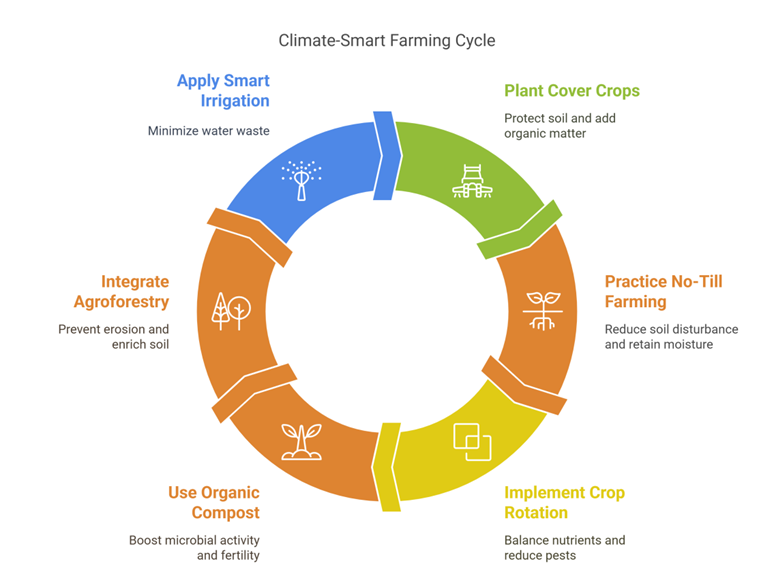
Here are some proven solutions:
- Cover Crops: Planting cover crops during off-seasons protects against erosion and adds organic matter.
- No-Till Farming: Reduces soil disturbance, helps retain moisture, and preserves soil structure.
- Crop Rotation: Balances soil nutrients and reduces pest buildup.
- Organic Compost: Boosts microbial activity and improves fertility naturally.
- Agroforestry: Integrating trees into farms prevents erosion, provides shade, and enriches soil.
- Smart Irrigation: Drip irrigation and moisture sensors minimize water waste.
These climate-smart agriculture practices not only protect soil and crops but also contribute to long-term food security.
Conclusion
Climate change is putting soil health and crop yields under growing pressure. Without action, the world could face serious threats to food production and nutrition. But with the right techniques and support, we can build a farming future that is both resilient and sustainable.
Healthy soil means healthy food, healthy people, and a healthy planet.
Read More: The Laser-Plasma Frontier: How AI is Unlocking New Dimensions in Physics
Follow Us on