

By: Izaz Ul Islam
Blog Aim
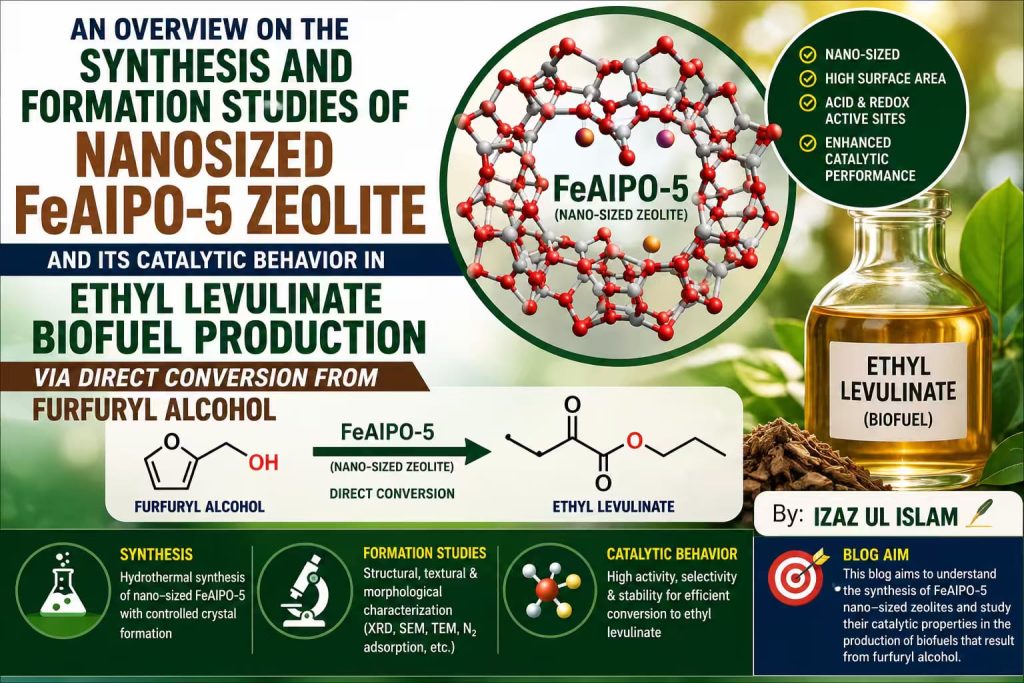
This blog aims to understand the synthesis of FeAlPO-5 nano–sized zeolites and study their catalytic properties in the production of biofuels that result from furfuryl alcohol.
Introduction
Zeolites are composed of tetrahedral silica (SO4-4) and alumina that is linked by oxygen atoms. They possess a high tendency to absorb and release water. The structure of zeolites is an open cavity/porous shape that consists of silica, Alumina and oxygen bonding with some active metals in a 3D crystal manner. Phosphorus, Alumina and Silica are the central atoms in the structure of zeolites, while the terminal atoms are the oxygen. Such units of Zeolites in which the terminal oxygen are not linked to the other zeolites units are called as Primary building block as shown in fig. 1. When the terminal oxygen atom combine/link with the terminal oxygen of another Zeolites units they are termed as secondary building block and results in the formation of prisms, rings and numerous other size as shown in fig. 2 [1-6]. The backbone of zeolites is comprised of alumina, a silicate framework in which the Aluminum ion (Al+3) and Silicon ion (Si+4) are arranged tetrahedrally and are enclosed by 4 oxygen anions (O2– ). Such a combination results in the formation of neutral zeolites because the cation’s positive charge is neutralized by the negative charge on the lattice. Ma/b[AlO2]a (SiO2)y] is the zeolite’s general composition. In the above representation, Ma corresponds to alkaline earth metals or alkali metal cation, earth metal cation is represented by “b”. C represents per unit cell the quantity of crystallization and y and a correspond to the total number of [AlO4]-5 and [SiO4] present in the zeolites. The ratio of [AlO4]-5 and [SiO4] varies from 1 to 5. However, the variation in this value depends upon the structure of Zeolites. Various studies reported that the ratio of y/a for silica-based zeolites ranges from 10 to 100 [7-9].
Zeolites are generally classified into two categories: natural zeolites and artificial zeolites. Sedimentary rocks and volcanic rocks are the common sources of naturally occurring zeolites such as chadazite, clinoptilolite and mordenite. On the other hand, synthetic zeolites are prepared by heating of soda ash, feldspar, china clay and other sources. Synthetic zeolites are further divided into Z, P, Y, X and A. Using various resources, these zeolites are prepared. Zeolites X and Y possess high stability and rigidity in their structure, having a large void space. This class of zeolites plays a significant role in the production of gasoline. Recently, using various natural resources such as bauxite, clay, and activated carbon. Kaolin, natural oxides, fly ash, coal and numerous oxides of silica are used to synthesize zeolites [10-14].
Using these natural resources, the synthesized zeolites possess a high porosity, hydrophilic nature, large surface area, and high potential for ionic exchange and are cheaper. Zeolites, either natural or artificial, have a wide range of applications in agriculture, industries and biomedical processes.
Recently, many researchers focused on the incorporation of metals in zeolites unit cell and their application in various reactions as a catalyst. Zhou et al. (2016 used AlPO5– molecular sieves incorporated with Co, Mn and Fe and studied their catalytic activities in the reduction of cyclohexane [15-17].
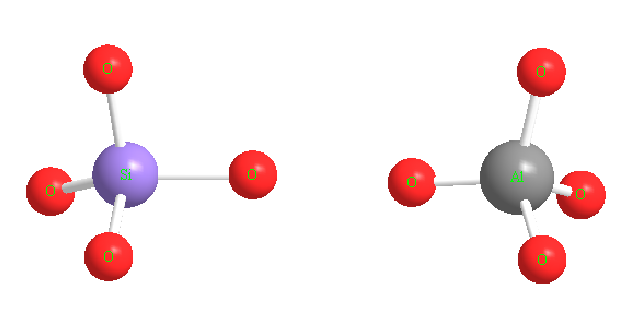
Fig. 1. Primary build unit of Zeolites
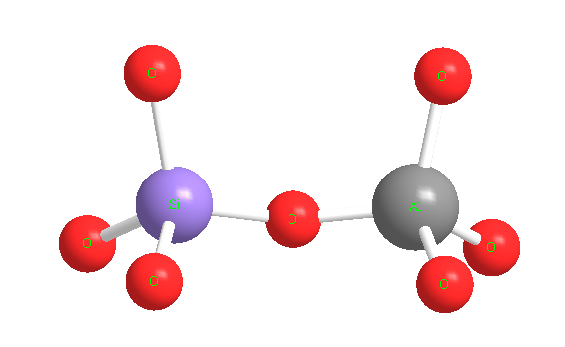
Fig. 2. Secondary building unit of Zeolites
Synthesis of Synthetic zeolites
Man-made or natural sources can be used as raw materials for the synthesis of zeolites. Economically zeolites synthesis from all types of raw materials is not suitable. In order to use the natural or manufactured resources for the zeolites synthesis they must possess some properties such as being easily available, low in cost, having a minimum amount of impurities and foreign substances, high productivity and selectivity [18, 19].
For the synthesis of synthetic zeolites, numerous solvothermal and physicochemical methods are used. The selection of an appropriate method of synthesis depends upon the interests of researchers, which zeolites type they want to synthesize [20, 21]. Below are some synthetic methods using that and various raw materials we can synthesized zeolites:
1. Solvothermal method
Solvothermal method is a synthetic method for the synthesis of zeolites that involves the use of solvent. Organic solvents are the most commonly used solvents, which include pyridine, alcohols e.g (pentanol, ethanol and methanol), hydrocarbons and ethylene glycol. In this method, the solvent possesses the properties of a polar solvent (Hydrophilic or non-polar solvent Hydrophobic). When an ionic solvent is used in this method, the term is replaced by ionothermal method. We can say that all the ionothermal and hydrothermal methods are solvothermal methods; however, not all the solvothermal methods are ionothermal or hydrothermal. In inothermal method, the solvent changes into ionic form, while in hydrothermal and solvathermal methods, the solvent maintains its molecular form. Numerous factors affect the solvothermal method of zeolites synthesis, including solvent reactant sources, ageing time, pressure, composition, temperature, alkali and silica ratio, condition of stirring, seeding time and alkalinity. By controlling these parameters, we can precisely and easily synthesize zeolites of our desired shape, distribution, size and can easily crystalized the final product [1]. Various studies used solvothermal method for the synthesis of zeolites, which include:
Takka et al., 2012 used solvothermal method for the synthesis of lithosite an aluminosilicate zeolites. During this method powdered low silica zeolites are mixed with KOH and alcohol solution at a temperature of 200-240 for a duration of 14-19 h and without any stirring.
Settaye at al., 2016 using Al2O3 and SiO2 as a source of raw material for the synthesis of P1 zeolites and Faujasite using his method [1].
2. Hydrothermal method
For zeolites synthesis, the hydrothermal method is considered as one of the basic techniques. Hydrothermal method is similar to solvothermal method but in this method a base is used and water as a solvent. Commonly this type of synthesis is carried out in a sealed container that is made up off polypropylene autoclave. The basic requirement of this technique for the synthesis of zeolites is low temperature. Due to this reason in comparison to other methods this technique is cost effective and very simple [22].
Many researchers prefer hydrothermal method for the zeolites synthesis because of the following advantages consumption of energy is extremely low, befouling of air quality is extremely low, reactants are highly reactive, metastable state formation, unique condensation phases and handling of solution is easy. Seedling, alkalinity, aluminum and silica ratio, time of aging, condition of template, reactants materials, pressure, batch composition and temperature are various factors that will affect the hydrothermal technique performance. Basically hydrothermal method consists of two stages (1) initial stage (2) crystallization Stage. The first stage involves the hydrated aluminosilicate gel formation. The second stage is the crystallization stage and is further divided into four sub stages that involves; 1) aluminate ions and polysilicate ions condensation 2) zeolites nucleation 3) nuclei growth 4) zeolites crystal growth [1, 22].
We can summarize this method as first of all we have to dissolve amorphous silica and aluminate in water that will results in the formation of a clear mixture or a sol gel. This sol mixture will be transferred to autoclave and heated until crystal formed. This step will be followed by nucleation stage and finally well grown crystals of zeolites will be synthesized.
Nyankson et al., 2018 used this method for the synthesis of Zn-exchanged Zeolites. The raw materials used for the synthesis of zeolites was silica and alumina deposits (feldspar, bauxite, kaoline and silica). The author reported that the time of crystallization for the synthesis of Zn-exchanges zeolites using hydrothermal method was around about 7 hrs.
Yao et al., 2018 using diatomite as a raw material for the synthesis of zeolites X powder using this method. Besides this various other reserachers used this method for zeolites synthesis.
3. Ionothermal method
This method involves the use of ionic liquid for the zeolites synthesis. Besides solvent these ionic liquid play a vital role in the solid formation by acting as a structure directing agent or as potential template. This method is similar to other method but the main difference is the use of ionic solvent. As compared to other method the solvent and template are same species that makes this method unique than the other method. Wang et al., 2019 synthesized germanosilicate zeolites by using this method [22].
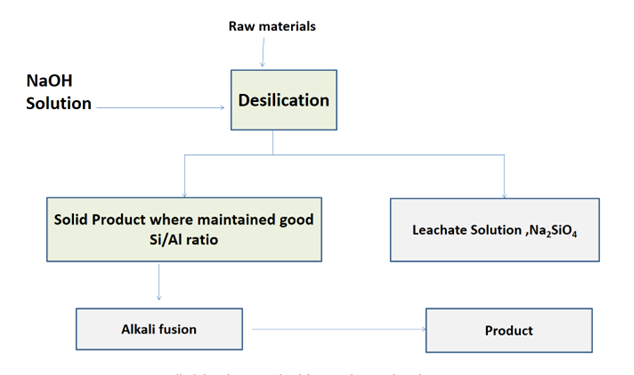
4. Alkali-fusion and leaching method
In the production of zeolite a generalized approach has been described by alkali fusion process for the decomposition of substance which is full with silica or rich with alumina and alkali activator is used, the activator is used to form soluble salt of aluminate as well as silicate. Alkali is also used in solvothermal techniques but these two methods have some common difference. Alkali is added in alkali fusion technique in order to stop multiphase and also to stick in hard form, while the other method which is solvothermal use alkali as solution form and it turns like a mineralizer for the reaction. The raw substance is first stuck to alkali in the alkali fusion method before to introduce into the hydrothermal treatment. In the hydrothermal process the fused product and water is mixed with each other under appropriate conditions of temperature for the formation of zeolite. The important factors which effect the alkali fusion process are (i) the ratio of silicon aluminum material,(ii) temperature, (iii) alkali medium concentration, and the rate of crystallization. In the past time many zeolites production are done by this process. For example many researchers stated the production of X- kind of zeolite by this process. It was stated that for the production of synthetic zeolite the alkali activator play a major role. In most of the techniques the hydrothermal process done after the alkali fusion process for the synthesis of zeolite. High temperature and pressure are required for both of the processes. Commercial substances are the main source for the zeolite production, which are full of mineral found in the earth crust, alumina silicate etc. Different zeolites can be produced by changing the conditions under which the experiment takes place. The advantages of this method are that it gives high purity of the zeolite, and this method require raw material of low grade. Some of the problems which are associated with this method are the consumption of the energy and cost. One another process which is alkali leaching is also used, in this process the leaching sustain the ratio of silica-alumina. Some important factors which effect this method are (i) temperature of the fusion (ii) leaching agent concentration (iii) rate of desalination (iv) rate of crystallization and the ration of silica to alumina. Many scientists stated and produced the zeolite through alkaline leaching process by the extract of the silica took from the ash of the fly, this zeolite has a great potential for cesium ion sorption. Some other scientists stated the production of ZSM-5 zeolite which is produced by desalination and alkali leaching process, the silicon dissolution which are done in NaOH is much faster than in tetraalkylammonium hydroxide, it makes very controllable process of demetallation which helps in the formation of various kind of zeolites. The major advantage of this method is product of very efficient quality is produced. But this method requires multisteps, it’s an expensive process and also require long time [1, 22, 23]. Fig. 3 and 4 describes alkali fusion and alkali leaching method.
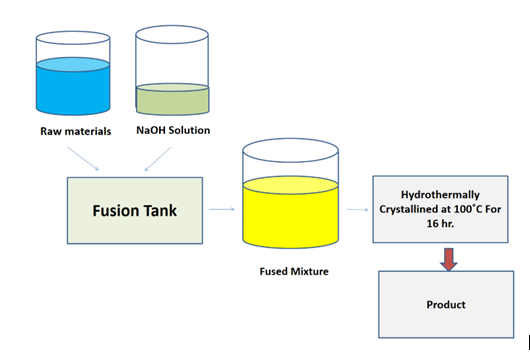
Fig. 3. Alkali Fusion Method
5. Sol-gel method
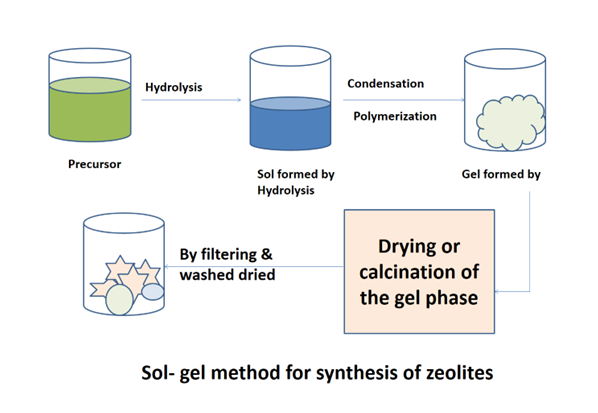
In this process a three dimensional linkage structure is formed. This process involves the production of colloidal suspension of inorganic nature. The process of sol-gel includes the changing of solution process from liquid state into a solid state, in other words from sol into a gel. This method is useful because it give fixed size of the particle and also give sophisticated porosity. Many factors affect the performance of this process. These factors include (i) the rate of heating, (ii) rate of hydrolysis, (iii) PH of operation. Many reports issued on this process. Han et al. (2007) formed porous zeolite substance from the use of template-free process. This process includes formation of ZSM-5 zeolite by hydrothermal recrystallization from xerogel. A two-step process of sol-gel is introduced by Wu et al., 2009 for the formation of MCM-22 zeolite, for thid process silica is provided by tetraethyl orthosilicate. Phiriyawirut et al., 2003 formed a zeolite which is called MFI by using silatrane. For this process a micro wave heating process is used for temperature control. They stated that for good crystallinity more ageing time is very important. Sathupunya et al., (2002) demonstrated the production of ANA and GIS zeolite from alumatrane and silatrane precursor combined with microwave method. One of the most important advantage of this process is that it does not requires expensive and special tools. This process requires molecular level mixing which results in the formation of homogeneity and good quality products. Although this process has a lot of advantages but there are some limitation associated with this process, one of the many limitation is the high cost of the precursor [22].
6. Microwave method
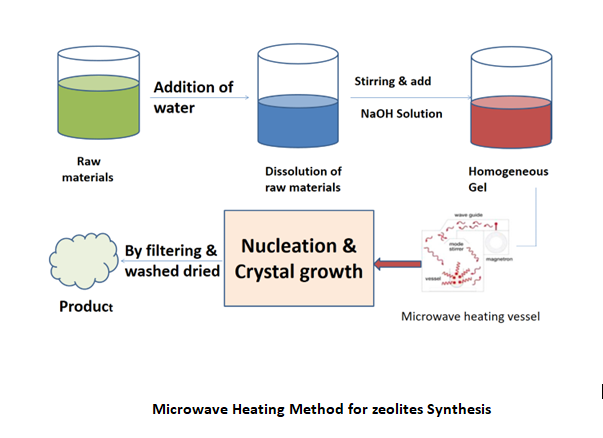
In this process microwave radiations are used for the production of zeolite, it is a very fast and energetic process. In this process the microwave used work as electric field of high frequency which form heat required for the reaction. Two process involved for the energy transfer into the reactant, which is resonance and relaxation. This process also has some important advantages, some of the advantages are that it provides concise time and due to this reason a small size particle and zeolite of high purity is obtained. Some important factors which affect the microwave process are (i) alkalinity (ii) temperature and time of zeolization (iii) temperature and time of crystallization (iv) wavelength produced. In some cases the production of zeolite by microwave process is done with combination of some other process such as ionothermal, hydrothermal and solvothermal. Kim et al., (2004) synthesized the beta zeolite in the media of fluoride by microwave process. They express the part of mineralization by fluoride through the microwave and also by seeding for the purposes to minimize the size of the particle because of nucleation. Lately, le et al. (2019) stated a quick microwave heating process for the synthesis of liquid form zeolite of Y type providing condition of extreme temperature, time of crystallization, and ratio of silica to alumina is investigated systematically. After 1990 the most important efforts on zeolitization process of ash of fly. Then many others scientist worked on the production of fly ash zeolite (Amoni et al (2019). Later Querol along with his colleagues proposed synthesis of zeolite by microwave hydrothermal process. Different materials of zeolite i-e analcime, NaP1, tobermorite, and nepheline hydrate were produced by using the fly ash, this is done by synthesis factors changing and also by the use of NaOH which acts as an agent of activation [1, 23].
7. Ultrasound energy method
A sound wave with frequency of twenty thousand hertz to two megahertz is called an ultrasound, it is a term associated with sonochemistry, and it has a lot of uses in synthetic chemistry. Many important processes, such as synthesis of crystalline and amorphous materials and reactions concerned with polymerization. In the production of zeolite the use of ultrasound got maximum attention due to its high impacts on the process of crystallization. Some of the advantages of this process are reaction with high speed, very simple process, it does not required difficult facilities, offers appropriate particle mass distribution, offers nucleation control and also morphology. The use of ultrasound creates cavitation and this is done when the microscopic lathers collapse and also their growth. The process of cavitation also creates 2ndry rates of nucleation and the purity of the crystal during the crystallization cooling. The past and the new use of synthetic zeolite the method of ultrasound deals with synthesis of zeolite with tunable properties. The nature and properties of zeolite depend upon the time, temperature and the reactants molar ratio. This process of zeolite production has been used to produce zeolite. Pal et al (2013) used ultrasound process for the production of NaP zeolite. The sound energy allows to produce active radical and it causes the zeolite to be crystallized quickly. One other important zeolite which is called ZSM-5 also synthesized by using the ultrasound process of zeolite production. In some cases the ultrasound process is applied with some other conservative process for the production of zeolite efficiently. The zeolite SSZ-13 is recognized as catalyst properties but it needs longer crystallization time which is the main drawback. Regarding this drawback Mu et al (2017) stated the use of ultrasound process which minimize the duration which is required for zeolite production.it was find out that the probability of ultrasound radiation were increased by the use of alkaline treatment. The zeolite formed by ultrasound process attracted the researchers because of their excessive effect in the production of zeolite [1].
Nanosized zeolites
Nanosized zeolites (5 – 1000 nm) as compared to micro sized zeolites possess unique properties that diverts the attention of scientists and researcher’s towards Nanotechnology.
Due to their unique properties nano sized zeolites are widely used for the purpose of catalysis, photonics, optical and electronic detection system, sensors, diagnostics, therapeutics and photovoltaic. The unique properties of nanosized zeolites are due to their size reduction to nano meter that leads to changes in the framework of zeolites i.e more surface area and porosity that imparts the zeolites completely new properties. These nano sized crystal posess homogeneity in size and morphology due to which they attract significant attention [17].
Incorporation of metal in Nano-sized zeolites
Soon after the discovery of aluminophosphate many researchers worked on the impregnation of alumino phosphate with metals such as Fe, Cu, Ni, Mo, Mn, Zn, Mg, Co and Ti. This metal impregnation imparts the aluminophosphate redox and acidic properties that diverts the attention of many researcher’s towards this. Among these metals incorporated nano-sized zeolites MeAPO-5 is commonly used in many reaction due to their remarkable catalytic performance. In benzene alkylation FeAPO-5, MnAPO-5 and CoAPO-5 nanosize zeolites possess good activity.
FeAlPO-5
Due to their unique properties iron containing aluminophosphate have been widely used as a catalyst. Using solvothermal and hydrothermal method these types of iron incorporated zeolites are prepared in closed autoclave under autogenous pressure.
Recently another method ionothermal method is used for the synthesis of FeAlPO-5. As compared to other method ionothermal method offer more advantages. Like in this method synthesis can be takes place at ambient pressure while other method required low pressure for the synthesis. The ionic liquid used in this method possess the ability to absorb the microwave if the synthesis is carried out under microwave condition. As a result the rate of crystal growth will be rapid with high productivity and selectivity.
Biofuel
In order to overcome the energy crises many researchers are trying to explore the alternate methods to fuels and fine chemicals. Using biomass resources the production of fuel and fuel additives divert the attention due to large consumption of petroleum globally and the rising environmental befouling.
Currently the focus of researchers are to find ways and method in order to use renewable resources for the production of chemicals fuels and fuels alternative. Non-renewable resources not only exhaust but also significantly contribute in greenhouse gases and other environmental hazards. These reasons urges researchers to develop alternative synthesis routes for the production of biofuels and high value added chemicals.
Ethyl levulinate (EL), furfural, levulinic acid (LA) and 5 – hydroxymethylfurfural can be prepared from various types of biomasses. Among this EL was included in the top 10 bio-based material by United States department of energy that can be considered as building block of various chemicals.
Ethyl levulinate is a versatile bio based material having wide range of applications in chemical industry, plasticizing agent, solvent and petroleum additives. EL has been considered as one of the best fuel additive that not only help in the improvement of diesel emission performance but also play a significant role in enhancing octane number of gasoline. In recent years the alkyl levulinates attract the attention of many researchers because of the similar physiochemical properties to that of fatty acid ester in biofuel. Besides this their additives component and fuel blending will help in the securing of future energy requirements set by EU and EPCEU [23-29].
Synthesis routes of Ethyl levulinate (EL) to furfuryl alcohol
There are many routes for the synthesis of EL from FAL. The two possible routes are [23];
Route 1 consist of two steps:
-
- First step involves LA esterification with ethanol by an acid catalyst.
- Second step involves LA esterification with ethanol over acid catalyst.
One of the disadvantage of this method is that FAL hydrolysis encounters FAL polymerization as a result the LA production is less. Besides this the heterogenous catalyst are poisoned by the carboxylate functional group in aqueous medium.
Second step involve the synthesis of ethyl levulinate to FAL by one step acid catalysis by ethanolysis.
As compared to route 1 route 2 ethanolysis is highly atom-economic as it inhibits the FAL polymerization and result in high yields of EL. FAL one step ethanolysis to EL is highly cost effective and hence more economical than route 1 {23, 30, 31].
Replacement of Homogenous catalyst by Heterogeneous Catalyst
Homogenous catalyst like (Bronsted acid HF, HCl , H2SO4 and lewis acid (TiCl4, AlCl3, FeCl3) are used in many reactions. The drawback of homogenous catalysts are reactors corrosion, high operation cost, reusability difficulties and separators. The efficiency of homogenous catalyst is low due to side reaction like autoxidation and polymerization.
In order to minimize this problem the homogenous catalyst is replaced by heterogeneous catalyst. Heterogeneous catalyst play a vital role in the promotion of green process because they are reusable, easily separable, selective and non-corrosive [18].
Synthesis of AlPO-5 nano crystals
Molar ratio of 1Al2O3: P2O5: [edmim] OH: 150H2O will be used to prepare the nanocrystal of AlPO-5. 4.020 g of aluminumisopropoxide (Aldrich, 98%) will be mixed with [edmin] OH solution [13.04 g] and 16.652 g of water. Magnetic stirrer will be used to stir the solution for a certain duration of time. Then 3.341g of phosphoric acid [Aldrich, 85 %] will be added slowly under vigorous stirring. Using 100 ml Teflon line autoclave the solution will be transferred and will be irradiated at certain temperature for specific duration. The colloidal suspension pH will be measured when the reaction will be cooled at room temperature [32].
Significance of this research work
The significance of this research work is the production of green fuels from furfuryl alcohol that will not only be cost-effective but also contribute towards a sustainable environment. Besides this, the use of zeolite nanoparticles as a catalyst will offer more advantages than a conventional homogeneous catalyst.
References
- Derbe, T., Temesgen, S., and Bitew, M. “A Short Review on Synthesis, Characterization, and Applications of Zeolites”. Hindawi, Advances in Materials Science and Engineering Volume 2021.https://doi.org/10.1155/2021/6637898.
- O. Odebunmi, F. O. Nwosu, A. O. Adeola, and T. G. Abayomi, “Synthesis of zeolite from kaolin clay from ErusuAkoko southwestern Nigeria. G. Olaremu,” Journal of Chemical Society of Nigeria, vol. 43, pp. 1–7, 2018.
- O. Omisanya, C. O. Folayan, S. Y. Aku, and S. S. Adefila, “Synthesis and characterization of zeolite a for adsorption refrigeration application,” Advances in Applied Science Research, vol. 6, pp. 3746–3754, 2012.
- El Gaidoumi, A. C. Benabdallah, B. E. Bali, and A. Kherbeche, “Synthesis and characterization of zeolite HS using natural pyrophyllite as new clay source,” Arabian Journal for Science and Engineering, vol. 43, pp. 1–8, 2011.
- Moshoeshoe, M. S. Nadiye-Tabbiruka, and V. Obuseng, “A Review of the chemistry, structure, Properties and Applications of zeolites.” American Journal of Materials Science, vol. 7, pp. 196–221, 2017.
M. N. Orjioke, O. Uchechukwu, C. N. Igwe, and U. Ajah, “Synthesis and characterization of zeolite and its application in adsorption of nickel from aqueous solution.” Journal Pharmaceutical and Chemical Biological Science, vol. 4, pp. 592–600, 2016. - E. Mgbemere and I. C. Ekpe, “Zeolite synthesis, characterization and application areas: a review.” International Research Journal of Environmental science, vol. 10, pp. 45–59, 2017.
- Ramezani, S. N. Azizi, and G. Cravotto, “Improved removal of methylene blue on modified hierarchical zeolite Y: achieved by a “destructive-constructive” method,” Green Processing and Synthesis, vol. 8, no. 1, pp. 730–741, 2019.
- Bacakova, M. Vandrovcova, I. Kopova, and I. Jirka, “Applications of zeolites in biotechnology and medicine – a rview,” Biomaterials Science, vol. 6, no. 5, pp. 974–989, 2018.
- Petranovskii, F. Chaves-Rivas, M. A. H. Espinoza, A. Pestryakov, and E. Kolobova, “Potential uses of natural zeolites for the development of new materials: short review,” vol. 85, pp. 1–5, 2016.
- Wang, H. Shi, and Y. Li, “Synthesis and characterization of natural zeolite supported Cr-doped TiO2 photocatalysts,” Applied Surface Science, vol. 258, no. 10, pp. 4328–4333, 2012.
- J Rhodes and J. Christopher, “Properties and applications of zeolites,” Science Progress, vol. 93, pp. 223–284, 2010.
- Nyankson, J.K. Efavi, A. Yaya, G. Manu, K. Asare, and J. Daafuor, “Synthesis and characterization of zeolite-A and Zn-exchanged zeolite-A based on natural aluminosilicates and their potential applications,” Cogent Engineering, vol. 5, pp. 1–23, 2018.
- Chunfeng, L. Jiansheng, S. Xia, W. Lianjun, and S. Xiuyun, “Evaluation of zeolites synthesized from fly ash as potential adsorbents for wastewater containing heavy metals,” Journal of Environmental Sciences, vol. 21, pp. 127–136, 2009.
- Pan, Z. Wu, C. Alex, and K. Yip, “Advances in the green synthesis of microporous and hierarchical zeolites: a short review,” Catalysts, vol. 9, pp. 1–18, 2019.
- Georgiev and S. Zagora, “Synthetic zeolites – structure, classification, current trends in zeolite synthesis: review,” in Proceedingas of the International Science conference, pp. 1–6, Jeju Island, Korea, December 2009.
- S. A. Melaningtyas, Y. K. Krisnandi, and R. Ekananda, “Synthesis and characterization of NaY zeolite from Bayat natural zeolite: effect of pH on synthesis,” Materials Science and Engineering, vol. 496, pp. 1–5, 2019.
- Deng, Q. Xu, and H. Wu, “Synthesis of zeolite-like material by hydrothermal and fusion methods using municipal solid waste fly ash,” Procedia Environmental Sciences, vol. 31, pp. 662–667, 2016.
- Ru´ız-Baltazar, R. Esparza, M. Gonzalez, G. Rosas, and R. P´erez, “Preparation and characterization of natural zeolite modified with iron nanoparticles,” Journal of Nanomaterials, vol. 2015, pp. 1–8, 2015.
- Manafia and S. Joughehdoust, “Production of zeolite using different methods,” in proceedings of the Iran International Zeolite Conference, pp. 1–7, Tehran, Iron, May 2008.
- Jujarama, K. Wijaya, M. Shidiq, M. Fahrurrozi, and Suheryanto, “Synthesis of biogasoline from used palm cooking oil through catalytic hydrocracking by using Cr-activated natural zeolite as catalyst,” Asian Journal of Chemistry, vol. 26, no. 16, pp. 5033–5038, 2014.
- J. Roth, P. Nachtigall, R. E. Morris, and J. Cejka, “Two- ˇ dimensional zeolites: current status and perspectives.” Chemical Reviews, vol. 114, no. 9, pp. 4807–4837, 2014.
- Khaleque, A., Alam, M.M., and Hoque, M. “Zeolite synthesis from low-cost materials and environmental applications: A review”. Environmental Advances 2 (2020) 100019.
- Nandiwale, K.Y., Pande, A.M., and Bokade, V.V. “One step synthesis of ethyl levulinate biofuel by ethanolysis of reneweable furfural alcohol over Zeolite catalyst”. RSC Adv., 2015, 5, 79224.
- Ahmad, E., Alam, I.,K.K. Pant, K.K., and Haider, M.A. “Catalytic and Mechanistic Insights into the Production of Ethyl Levulinate from Biorenewable Feedstocks”.DOI: 10.1039/C6GC01523A
- Zhou, S., Long, M., Wu, L., Lei, M. “Titanate nanotubes covalently bonded sulfamic acid as a heterogeneous catalyst for highly efcient conversion of levulinic acid into n‑butyl levulinate biofuels”. Biomass Conversion and Biorefnery https://doi.org/10.1007/s13399-022-03179-5
- Jiang, Z., Hu, D., Zhao, Z., Yi, Z., Chen, Z., Yan, K. “Mini-Review on the Synthesis of Furfural and Levulinic Acid from Lignocelluosic Biomass”. Processes, 9(7), 1234, 2021.
- Imyen, T., Saenluang, K., Dugkhuntod, P., Wattanakit, C. “Investigation of ZSM-12 nanocrystals evolution derived from aluminosilicate nanobeads for sustainable production of ethyl levulinate from levulinic acid esterification with ethanol”. Microporous and Mesoporous Materials, 312, 110768, 2021.
- Liu, X., Yang, W., Zhang, Q., Li, C., Wu, H. “Current approaches to alkyl levulinates via efficient valorization of biomass derivatives”. Frontiers in Chemistry, 8, 1–13, 2020.
- Zainol, M. M., Asmadi, M., Iskandar, P., Wan Ahmad, W. A. N., Amin, N. A. S., Hoe, T. T. “Ethyl levulinate synthesis from biomass derivative chemicals using iron doped sulfonated carbon cryogel catalyst”. Journal of Cleaner Production, 281, 124686. 41, 2021.
- Zhao, G., Liu, M., Xia, X., Li, L., Xu, B. “Conversion of Furfuryl alcohol into ethyl levulinate over glucose-derived carbon-based solid acid in ethanol”. Molecules, 24(10), 1881, 2019.
- Yadav, G. D., Yadav, A. R. “Synthesis of ethyl levulinate as fuel additives using heterogeneous solid superacidic catalysts: Efficacy and kinetic modeling”. Chemical Engineering Journal, 243, 556–563.
- Ng, E-P., Ng, D. T-L.., Awala, H., Wong, K-L., and Mintova, S. “Microwave synthesis of colloidal stable AlPO-5 nanocrystals with high water adsorption capacity and unique morphology”. Materials Letters 132, 126–129, 2014.
Editor: Ayesha Noor