

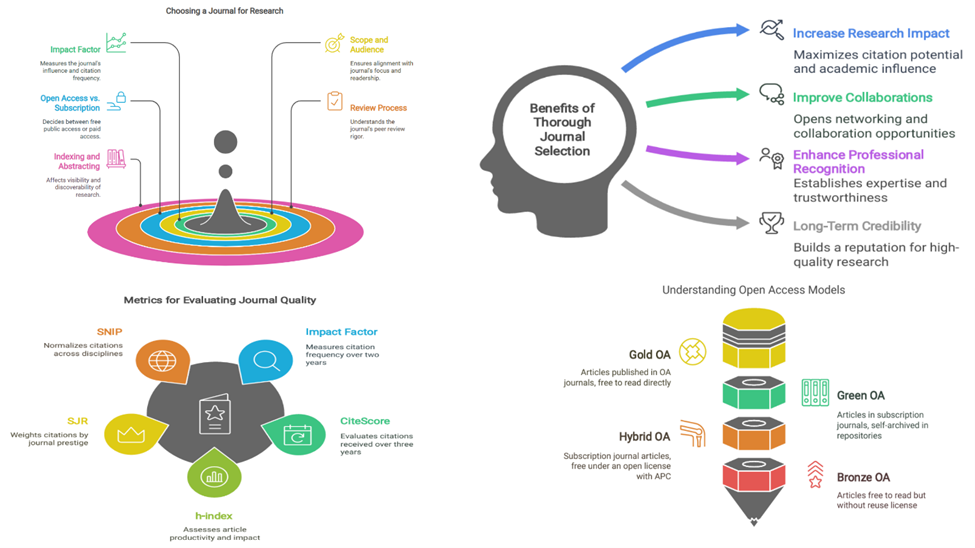
Selecting the right journal can determine the visibility, impact, and success of your research publication.
By: Izaz Ul Islam
Introduction
Publishing research is a major milestone in any academic career, but selecting the right journal can be just as important as conducting the research itself. With thousands of scholarly journals available across different disciplines, choosing the most suitable publication venue has become increasingly challenging.
A well-chosen journal ensures that your work reaches the right audience, gains meaningful citations, and contributes effectively to scientific progress. Conversely, submitting to an unsuitable journal can result in rejection, publication delays, limited visibility, and reduced research impact.
This guide outlines the key factors researchers should consider when choosing the right journal for publication in 2026.
Why Choosing the Right Journal Matters
Enhanced Visibility and Readership
One of the primary goals of publishing research is to reach readers who can benefit from the findings. Selecting a journal with the appropriate audience increases the likelihood that your work will be read, discussed, and applied.
Journals with broad circulation, strong digital presence, and open-access options often provide greater visibility among researchers, industry professionals, policymakers, and educators.
Increased Citations
Citations remain one of the most important indicators of research impact. Publishing in journals that are widely indexed and easily accessible can significantly increase citation potential.
Open-access journals often receive higher readership because articles are freely available to researchers worldwide.
Career Advancement
A strong publication record in reputable journals can enhance academic credibility and support career progression. Publications are frequently considered during hiring decisions, promotions, grant evaluations, and admissions to advanced academic programs.
Publishing in respected journals demonstrates scientific rigor and professional competence.
Research Quality and Credibility
High-quality journals maintain strict editorial standards and rigorous peer-review processes. Publishing in such journals adds credibility to your work and signals that the research has undergone thorough scientific evaluation.
Greater Media and Industry Impact
Research published in reputable journals is more likely to receive attention from media outlets, policymakers, industry stakeholders, and funding organizations. This broader exposure can amplify the real-world impact of scientific discoveries.
Risks of Choosing the Wrong Journal
Manuscript Rejection
Many leading journals have acceptance rates below 20 percent. Common reasons for rejection include:
• Research outside the journal’s scope
• Weak methodology
• Poor manuscript preparation
• Ethical concerns
• Insufficient novelty
• Inadequate discussion of results
Selecting a journal that closely aligns with your research topic can substantially improve acceptance chances.
Reduced Research Visibility
Even high-quality research may receive little attention if published in a journal with limited readership or poor indexing.
Publishing in Predatory Journals
Predatory journals often claim to provide rapid publication but lack proper peer review and editorial standards. Publishing in such journals can damage a researcher’s reputation and reduce the credibility of their work.
Lower Academic Impact
Poor journal selection may lead to fewer citations, reduced collaboration opportunities, and limited influence on future research, policy, or practice.
Key Factors to Consider When Choosing a Journal
Scope and Target Audience
The first consideration should be whether your research aligns with the journal’s aims and scope.
Review recently published articles and examine the journal’s most cited papers. If your work fits naturally within the topics regularly published by the journal, it is likely a suitable choice.
Journal Metrics and Impact Factor
Journal metrics help assess the influence and reach of a publication.
Common metrics include:
• Journal Impact Factor (JIF)
• CiteScore
• h-index
• SCImago Journal Rank (SJR)
• Source Normalized Impact per Paper (SNIP)
While higher metrics often indicate greater visibility, journal fit should always take priority over prestige alone.
Indexing and Abstracting Services
Researchers should ensure that the journal is indexed in reputable databases such as:
• PubMed
• Scopus
• Web of Science
• Embase
• Directory of Open Access Journals (DOAJ)
Indexed journals generally provide greater discoverability and credibility.
Open Access vs Subscription-Based Journals
Open Access Journals
Open-access journals allow readers to access articles freely without subscription barriers.
Advantages include:
• Higher visibility
• Wider readership
• Greater citation potential
Potential limitation:
• Article Processing Charges (APCs)
Subscription-Based Journals
Subscription journals restrict access to paying subscribers or institutions.
Advantages include:
• Often lower author costs
• Established reputation
Potential limitation:
• Reduced accessibility for readers
Understanding Open Access Models
Green Open Access
Authors archive a version of their manuscript in a repository while the publisher retains copyright.
Gold Open Access
Articles are immediately accessible on the publisher’s website, often requiring an APC.
Hybrid Open Access
Subscription journals offer authors the option to make individual articles openly accessible.
Diamond or Platinum Open Access
Neither readers nor authors pay fees. Costs are covered by institutions or organizations.
Bronze Open Access
Articles are free to read but lack a clear reuse license.
Peer Review Process
A reputable journal should provide transparent information regarding:
• Peer-review procedures
• Editorial policies
• Review timelines
• Conflict-of-interest management
• Ethical guidelines
Double-blind peer review remains one of the most respected approaches for ensuring unbiased evaluation.
Readership and Global Reach
Consider whether the journal reaches the audience you want to engage.
For specialized topics, niche journals often outperform broad multidisciplinary journals because they directly target the relevant research community.
How to Identify Predatory Journals
Predatory journals are a growing concern in academic publishing. Researchers should carefully evaluate journals before submission.
Website Red Flags
Warning signs may include:
• Missing ISSN numbers
• Poor website design
• Unrealistic claims about readership
• Inaccurate contact information
Submission Concerns
Be cautious if:
• Manuscripts are submitted solely through email
• Publication fees are hidden until after submission
• Copyright transfer is requested prematurely
Peer Review Warning Signs
Potential indicators of predatory behavior include:
• Acceptance within a few days
• No reviewer comments
• Guaranteed publication promises
• Lack of transparency regarding editorial processes
Verification Tools
Researchers can verify journal credibility using:
• Think. Check. Submit.
• Directory of Open Access Journals (DOAJ)
• Committee on Publication Ethics (COPE)
• Journal Citation Reports (JCR)
• Cabells Journalytics
Best Journal Selection Tools in 2026
Several tools can help researchers identify suitable journals.
Elsevier Journal Finder
Matches manuscripts with relevant Elsevier journals based on title, abstract, and keywords.
Springer Journal Suggester
Provides journal recommendations based on manuscript content.
Journal Insights
Offers detailed information about acceptance rates, review timelines, and journal performance.
Think. Check. Submit.
Helps researchers evaluate journal credibility and avoid predatory publishers.
Understanding Journal Metrics
Impact Factor (IF)
Measures the average number of citations received by articles published in a journal over a specific period.
CiteScore
An Elsevier metric that evaluates citations over a four-year period.
h-index
Measures both productivity and citation impact of a journal.
SCImago Journal Rank (SJR)
Weights citations according to the prestige of the citing journal.
Source Normalized Impact per Paper (SNIP)
Adjusts citation impact according to differences between research disciplines.
While these metrics are valuable, they should complement—not replace—considerations related to journal scope and audience.
Benefits of Choosing the Right Journal
Selecting the right journal offers several advantages:
• Greater research visibility
• Increased citation potential
• Enhanced academic reputation
• Improved networking opportunities
• Greater influence on policy and practice
• Stronger prospects for future funding
• Long-term preservation and accessibility of research
Final Checklist Before Submission
Before submitting your manuscript, ask yourself:
✓ Does the journal match my research topic?
✓ Is the journal indexed in reputable databases?
✓ Does it use a transparent peer-review process?
✓ Is the journal free from predatory publishing practices?
✓ Does its audience align with my target readers?
✓ Have I reviewed recent articles published by the journal?
✓ Are publication fees and policies clearly stated?
Conclusion
Choosing the right journal is one of the most important decisions in the research publication process. A journal that aligns with your topic, audience, and publication goals can significantly improve visibility, citations, and academic impact.
By carefully evaluating journal scope, indexing status, peer-review quality, and key metrics such as Impact Factor and CiteScore, researchers can make informed publishing decisions while avoiding predatory journals.
Investing time in journal selection today can maximize the reach, credibility, and long-term influence of your research for years to come.
Reference
International Committee of Medical Journal Editors (ICMJE), Journal Citation Reports (Clarivate), Directory of Open Access Journals (DOAJ), Committee on Publication Ethics (COPE), and Nature Portfolio publishing guidelines.
Editor: Ayesha Noor