

Engineering hydrochar into functional carbon materials
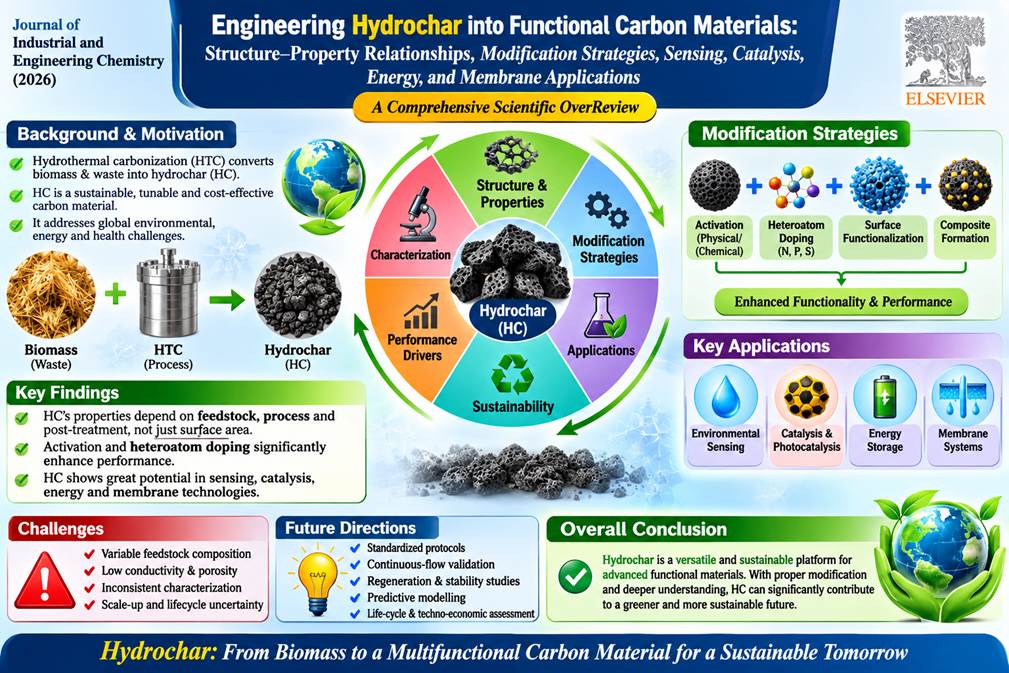
Structure–property relationships, modification strategies, sensing, catalysis, energy, and membrane applications
Journal of Industrial and Engineering Chemistry | DOI: 10.1016/j.jiec.2026.10.042
Published online: 5 November 2026 • Review article • 32 pages
Purpose of this document: a detailed, research-oriented reading of the published article. The discussion distinguishes what the review reports from critical interpretation of its argument. It is not a reproduction of the source article and does not independently verify every primary study cited by the author.
1. Executive scientific overview
The review positions hydrochar (HC) as a tunable biomass-derived carbon platform rather than merely a low-cost adsorbent. Its central contribution is an integrated feedstock–process–structure–property–performance framework that links biomass composition and hydrothermal carbonization (HTC) conditions to carbon structure, pore architecture, surface chemistry, defects, electronic properties and, ultimately, application-specific performance.
The most important message is that no single descriptor—particularly BET surface area, aromaticity or total heteroatom content can reliably predict performance across all applications. A material optimized for adsorption may not be optimal for electrocatalysis or energy storage. Instead, HC should be engineered around the rate-limiting requirement of the intended application: accessible binding sites, molecular transport, interfacial charge transfer, redox activity, ionic conductivity, mechanical integrity or selective membrane transport.
The review also emphasizes that pristine HC, activated hydrochar (AHC), hydrochar-derived carbon (HDC) and HC-based composites are materially distinct categories. Activation can increase accessible porosity; secondary carbonization can improve carbon ordering and conductivity; doping can alter electronic structure and active-site chemistry; and composite formation can introduce new interfaces. These gains are accompanied by trade-offs in yield, surface oxygen groups, process complexity, chemical consumption, stability and environmental footprint.
Key points
- HTC is particularly attractive for wet biomass because it can reduce or avoid energy-intensive pre-drying.
- Feedstock composition and HTC conditions jointly determine HC yield, elemental ratios, morphology, porosity and surface chemistry.
- Accessible pore structure and chemically relevant surface sites matter more than BET area alone for adsorption.
- Conductivity, defects, heteroatom configuration and active-phase interfaces must be balanced for catalytic and electrochemical uses.
- Direct HC-modified membrane evidence is comparatively limited; the article explicitly calls for controlled, realistic validation.
- Reproducibility, real-matrix testing, regeneration, leaching/toxicity, scale-up, life-cycle assessment (LCA) and techno-economic assessment (TEA) remain major translation gaps.
Article details and scope
| Details | |
| Title | Engineering hydrochar into functional carbon materials: structure–property relationships, modification strategies, sensing, catalysis, energy, and membrane applications |
| Author / affiliation | Erdal Yabalak; Mersin University, Türkiye |
| Journal / DOI | Journal of Industrial and Engineering Chemistry; https://doi.org/10.1016/j.jiec.2026.10.042 |
| Article type / dates | Review article; received 5 September 2026; revised 6 October 2026; accepted 31 October 2026; available online 5 November 2026 |
| Review scope | HTC fundamentals, HC structure and classification, modification, sensing, catalysis, energy systems, membranes, comparison with other carbon materials, barriers and future directions |
2. Central conceptual framework
The article’s organizing logic is a causal chain, not a simple list of applications. Feedstock chemistry sets the initial carbon, heteroatom and mineral inventory. HTC controls the extent of hydrolysis, dehydration, decarboxylation, condensation and aromatization. These transformations generate the primary structure. Post-treatment then modifies pore accessibility, functional groups, defect populations and electronic connectivity. The final properties govern the limiting transport, adsorption, interfacial or reaction step.
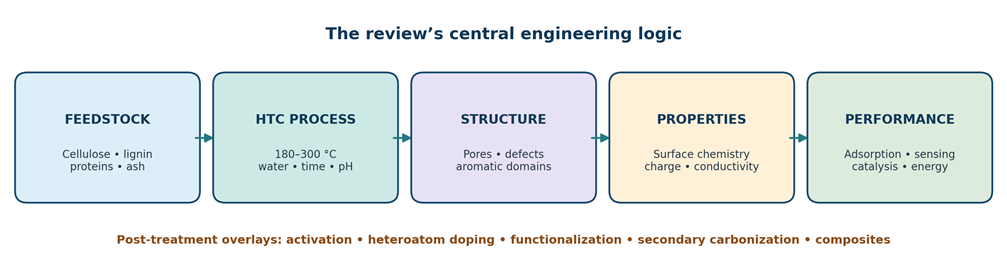
Figure 1. Feedstock–process–structure–property–performance framework reconstructed from the article’s central argument.
A useful interpretation is that the framework contains two levels of control: (i) upstream control through feedstock selection and HTC severity, and (ii) downstream correction through activation, doping, functionalization, secondary carbonization or hybridization. The latter should be selected only after identifying which material property is limiting.
Why this framework matters
- It explains why identical HTC temperatures can produce different chars from different feedstocks.
- It prevents invalid comparisons between pristine HC and strongly post-treated HDC or activated materials.
- It replaces the assumption that “more surface area” or “more dopant” automatically means better performance.
- It makes application-specific optimization and meaningful control experiments central to materials design.
3. Hydrothermal carbonization: chemistry and process variables
HTC is an aqueous thermochemical conversion process that converts wet biomass into a carbon-rich solid. The review gives a typical operating envelope of approximately 180–300 °C and autogenous pressures of roughly 10–65 bar, with many structural discussions focused on 180–250 °C. Water acts as both reaction medium and participant in the conversion chemistry.
3.1 Reaction sequence
The article describes a network of interconnected reactions: hydrolysis of cellulose and hemicellulose produces soluble sugars (including glucose and xylose); dehydration and fragmentation yield furanic intermediates such as 5-hydroxymethylfurfural (HMF) and furfural; further condensation, polymerization and aromatization contribute to the carbon-rich solid. Decarboxylation, aldol condensation and reactions involving pyruvaldehyde and 3-deoxyglucosone also contribute. The resulting HC retains oxygen-containing groups because hydrothermal carbonization is generally less severe than high-temperature pyrolysis.
3.2 Principal operating variables
| Variable | Role described in the review | Potential trade-off / interpretation |
| Feedstock composition | Cellulose, hemicellulose, lignin, proteins, lipids, extractives, ash and minerals shape reaction pathways and product properties. | Same process conditions do not imply equivalent HC across feedstocks. |
| Temperature | Controls hydrolysis, dehydration, decarboxylation and carbonization; higher temperature generally increases carbonization and heating value. | Can reduce solid yield and oxygen functionality; pore area may change non-monotonically. |
| Residence time | Allows secondary condensation, polymerization and aromatization to proceed. | Longer times can reduce solid yield and alter morphology. |
| pH / acid addition | Can influence hydrolysis and dehydration; organic acids may alter yield and surface chemistry. | Acid addition creates extra chemical and downstream neutralization burdens. |
| Pressure / water availability / solids loading | Influence phase behaviour and reaction-medium properties. | Pressure is largely autogenous; it should not be treated as an isolated carbonization driver. |
3.3 Product streams and sustainability
HTC generates more than a solid char: carbon is distributed among HC, process water and a smaller gas fraction. The aqueous phase can contain organic acids, phenolics, furans, sugars and inorganic compounds. Its treatment, recycling or valorization must be included in sustainability analysis. Anaerobic digestion or recovery of dissolved products may improve process integration, but the article does not present a single universally preferred process-water solution.
3.4 Quantitative examples reported
| System / condition | Reported change | Scientific interpretation |
| Camellia oleifera shell; 150 → 300 °C | HC yield 72.45 → 41.88%; H/C 1.30 → 0.77; O/C 0.66 → 0.27; HHV 19.22 → 29.97 MJ kg⁻¹. | Greater carbon/energy densification occurs at the expense of solid recovery. |
| Paper-board-mill sludge; 180 °C/6 h → 220 °C/6 h | BET area 3.58 → 6.31 m² g⁻¹; H/C 1.52 → 1.20; O/C 0.60 → 0.53. | Under these conditions, moderate temperature increase improved textural development. |
| Paper-board-mill sludge; 240 °C/10 h | BET area reported as 4.32 m² g⁻¹, below the 220 °C/6 h value. | Pore development is non-monotonic; severity does not guarantee higher BET area. |
| Corn-stalk HC; 200 °C/26 h | BET area 12.04 m² g⁻¹ and Cr(VI) removal 67.26%. | Chemical affinity and accessible surface functionality can compensate for modest BET area. |
The review cites a particularly striking comparison in which corn-stalk HC with 12.04 m² g⁻¹ BET area showed greater Cr(VI) adsorption than a commercial activated carbon reported at 801.53 m² g⁻¹. This is presented as evidence that BET area alone is insufficient—not as a universal claim that HC outperforms activated carbon.
4. Material identity: HC, AHC, HDC and composites
| Material class | Definition in the article | Typical implications |
| Pristine HC | Direct HTC product, without subsequent activation or high-temperature carbonization. | O-rich surface; modest accessible porosity; relatively low conductivity. |
| Activated hydrochar (AHC) | HC treated by physical or chemical activation. | Greater accessible pore volume / altered pore-size distribution; surface chemistry and defects may also change. |
| Hydrochar-derived carbon (HDC) | HC subjected to secondary/high-temperature carbonization or substantial thermal conversion. | Greater carbon ordering and often conductivity; fewer oxygen-containing groups may remain. |
| HC-based composite | HC combined with a second functional phase without complete conversion of the HC matrix. | Interfacial properties can add catalytic, conductive, mechanical or selective functions. |
| HDC-based composite | HDC combined with another functional phase. | Conductive/ordered carbon support coupled to the properties of the added phase. |
This classification is one of the review’s most useful methodological contributions. Reported performance values should not be compared without recording the complete processing history. A paper describing “hydrochar” may in fact be discussing activated, doped, thermally converted or composite material; these labels carry different structural meanings.
4.1 Structural and surface descriptors
- Pore architecture: micropores can provide adsorption or ion-storage sites; mesopores and macropores support diffusion and transport of larger molecules or solvated ions.
- Oxygen-containing groups: hydroxyl, carboxyl, carbonyl and ether functionalities contribute to hydrophilicity, surface charge, complexation, hydrogen bonding and ion exchange.
- Aromaticity and ordering: increasing carbonization can promote structural condensation and potentially improve electronic connectivity, but aromaticity alone is not a conductivity measurement.
- Defects: can provide chemically active or electrochemically relevant sites, but excessive disorder can impair electron transport or structural stability.
- Heteroatom configuration: pyridinic, pyrrolic and graphitic nitrogen, and the chemical states of S/P/B, may influence activity differently; total dopant concentration is insufficient.
- Surface charge: depends on ionizable groups and solution pH; zeta potential and pH should be reported when electrostatic mechanisms are proposed.
- Mineral / ash content: can alter adsorption, catalysis, pore accessibility and measured surface properties.
4.2 Characterization strategy
| Technique | What it helps establish | Critical interpretation |
| SEM / TEM / HRTEM | Particle morphology, surface texture, dispersion and interfaces. | Images alone do not quantify accessible pore volume or prove chemical bonding. |
| N₂ adsorption / BET / pore analysis | Specific surface area, pore volume and pore-size distribution. | Report degassing and analysis protocol; BET area is not a standalone performance predictor. |
| FTIR | Functional-group fingerprints and changes after modification. | Band overlap and qualitative assignments require corroboration. |
| XPS | Surface elemental composition and chemical states, including heteroatom configurations. | Surface-sensitive; quantify fitting approach and avoid over-assigning peaks. |
| XRD / Raman | Crystalline phases, carbon ordering and disorder-related features. | Do not equate a broad carbon peak or Raman ratio directly with conductivity. |
| Elemental analysis / H:C and O:C | Bulk composition and carbonization trends. | Interpret alongside yield and ash content. |
| TGA | Thermal stability and mass-loss behaviour. | Atmosphere and heating protocol must be specified. |
| Zeta potential / pHₚzc | Surface charge behaviour as a function of solution conditions. | Essential for defensible electrostatic adsorption claims. |
| Conductivity / EIS / electrochemistry | Electronic transport and interfacial resistance. | Measure directly; do not infer conductivity from aromaticity alone. |
5. Engineering and modification strategies
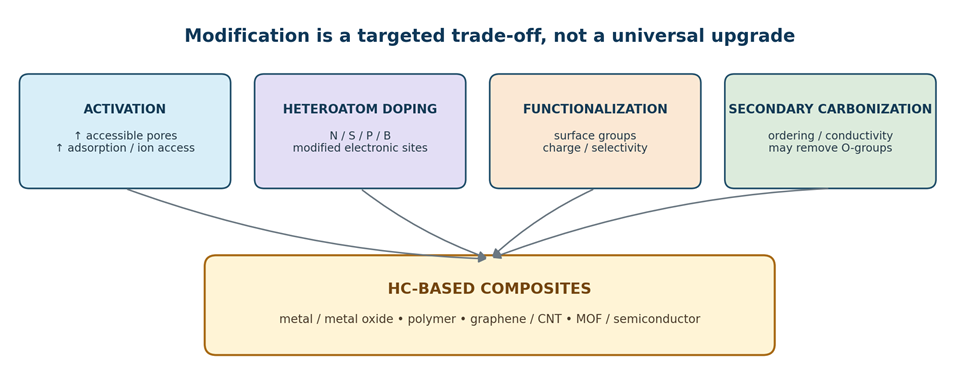
Figure 2. Modification routes and their intended effects; each route introduces trade-offs.
5.1 Physical and chemical activation
Activation is used to increase accessible pore volume and tune pore-size distribution. Chemical activation (the review mentions KOH as an example in energy applications) can produce microporosity and improve adsorption or electrolyte access. Activation may also alter oxygen groups and defect density, requires washing and chemical handling, and can increase process cost and environmental burden.
5.2 Heteroatom incorporation
N, S, P and B incorporation changes electron density, acid–base behaviour, polarity, defect chemistry and potential active-site populations. Nitrogen can increase basicity and electron-donor capacity, but catalytic or sensing behaviour depends on the configuration and spatial distribution of N, not simply the total nitrogen percentage. Similar caution applies to S/P/B. Doping should be supported by XPS chemical-state analysis and functional testing.
5.3 Surface functionalization
Oxidation, grafting and other chemical treatments can tune surface polarity, charge, affinity and selectivity. They are particularly relevant to adsorption, sensing and membrane interfaces. However, adding oxygen-rich groups may improve hydrophilicity or chemical binding while potentially reducing hydrophobicity or electronic transport.
5.4 Secondary carbonization
Thermal conversion after HTC can increase carbon ordering and electronic conductivity, supporting electrocatalysis, electrodes and sensors. The trade-off is loss or transformation of oxygen-containing surface groups and potentially altered defect populations. The review therefore treats HDC as a different material category from pristine HC.
5.5 Composite formation and interfaces
HC can be combined with metals, metal oxides, polymers, graphene-derived materials, CNTs or other functional phases. The carbon may act as adsorbent, conductive support, electron mediator, stabilizing scaffold or active phase. A key mechanistic requirement is to distinguish the role of HC from that of the added semiconductor or metal. Appropriate controls include each individual component, a physical mixture and the engineered composite.
A performance increase in a composite is not, by itself, proof of synergy. Synergy should be demonstrated against well-designed controls, with evidence for the proposed interfacial process (for example, charge transfer, active-site accessibility or improved dispersion).
6. Application domains: mechanisms and evidence
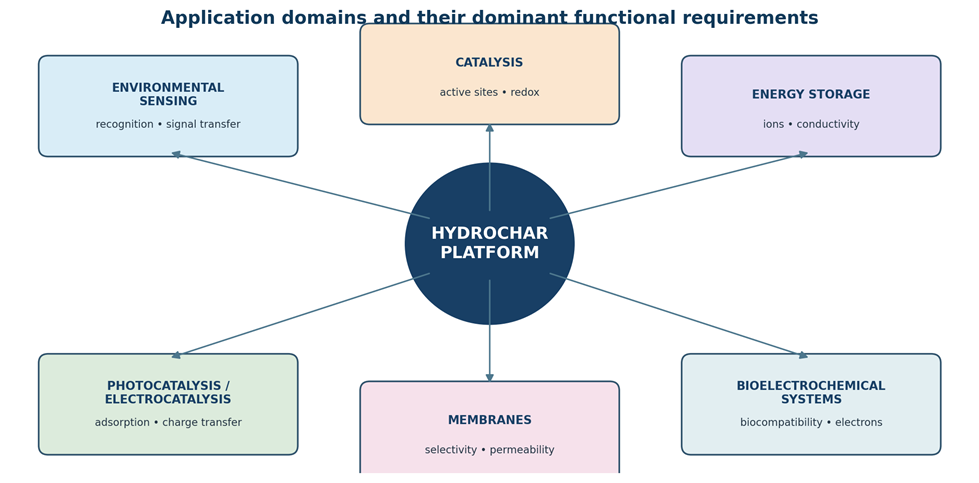
Figure 3. Application map linking HC functionality to the dominant interfacial process.
6.1 Environmental sensing
HC and HC-derived materials are explored in electrochemical, conductometric, gas/VOC and optical/fluorescence sensing. In electrochemical systems, the material must combine analyte recognition or accumulation with efficient electron transfer. Oxygen-containing groups and surface charge can help bind analytes, while conductive carbon domains, metal nanoparticles or dopants can improve signal transduction. Analytical reporting should include sensitivity, linear range, limit of detection (LOD), selectivity, response/recovery time, reproducibility and matrix tolerance.
Examples highlighted by the article include orange-peel-derived HC for chemical sensing; spent-coffee-ground HC combined with metal nanoparticles for simultaneous detection of emerging contaminants in natural water; malt-bagasse-derived material for Pb²⁺ stripping-voltammetric detection; and pistachio-shell-derived HC for glucose and lactate sensing in sweat. One malt-bagasse system is reported with a linear range of 0.50–7.06 μmol L⁻¹, an LOD of 55.0 nmol L⁻¹ and recoveries of 91.19–109.22% in tap and river water.
Optical and fluorescence applications often involve hydrochar-derived carbon dots (CQDs/CDs), rather than bulk HC. The article discusses biomass/HC as a renewable precursor to fluorescent nanocarbons and describes optical readouts based on fluorescence intensity, emission wavelength, absorbance or visible colour. The distinction between HC and HC-derived CDs must be maintained.
6.2 Catalysis, photocatalysis and electrocatalysis
HC can serve as a catalyst support, adsorptive concentrator, source of surface functional groups, conductive scaffold or part of an active carbon–inorganic interface. Oxygenated groups can anchor metal ions and nanoparticles. The carbon matrix can concentrate reactants near active sites, while defects and heteroatoms can modify adsorption and redox behaviour. In photocatalysis, an HC-containing composite may improve pollutant removal through adsorption, light absorption, charge separation or interfacial electron transfer; these contributions must be separated experimentally.
The review warns that disappearance of a parent pollutant is not equivalent to mineralization. Total organic carbon (TOC), transformation-product analysis and appropriate controls are needed to establish degradation pathways. For electrocatalysis, the carbon phase may improve electron transport and support metal/metal-oxide dispersion, but the actual active phase must be identified. The article also notes a 2026 study evaluating potato-peel-derived hydrochar as a catalyst for water splitting and discusses N-doped HC in oxygen-reduction contexts.
6.3 Energy storage: supercapacitors
Supercapacitor performance depends on the combined effects of accessible surface, hierarchical pore structure, electrolyte transport, conductivity and surface redox chemistry. Micropores can contribute to electrical double-layer charge storage, while mesopores and macropores facilitate ion transport. Oxygen- and heteroatom-containing groups can contribute pseudocapacitance. The article reports an activated HC-derived electrode with a specific capacitance of approximately 362.5 F g⁻¹ and about 95% retention after 2000 cycles; other HC-derived composites are reported at approximately 201–340 F g⁻¹ at 0.5 A g⁻¹ with about 88.6% retention after 5000 cycles. These values are system-specific and should not be compared without matching electrolyte, electrode loading, current density, cell configuration and calculation basis.
6.4 Energy storage: batteries
The review covers HC-derived hard carbon and related materials for lithium-, sodium- and potassium-ion batteries. Here, electronic conductivity, ion-accessible pores, interlayer spacing, defects, closed pores and structural stability become central. The HC matrix can provide mechanical support and buffer volume changes; conductive carbon networks can reduce resistance; and N/S/P doping can alter electronic structure and ion-storage behaviour. Importantly, hydrothermally derived hard carbon is not equivalent to pristine HC. Battery metrics such as capacity, coulombic efficiency, rate capability and cycling stability require full disclosure of thermal history and electrode configuration.
6.5 Fuel cells and bioelectrochemical systems
HC-derived carbons are discussed as potential catalyst supports and electrode materials in fuel cells, microbial fuel cells and enzymatic biofuel cells. Relevant properties include conductivity, biocompatibility, interconnected porosity, enzyme immobilization, microbial attachment and extracellular electron transfer. Pristine HC may require activation or secondary carbonization to achieve adequate electron transport.
6.6 Functional membranes and filtration
HC-modified membranes could combine membrane separation with adsorption. Potential mechanisms include electrostatic attraction, surface complexation, hydrogen bonding, π–π interactions, pore filling and ion exchange. Membrane performance is inherently multi-objective: increasing HC loading or adsorption affinity may reduce permeability, alter selectivity or affect mechanical integrity and fouling. A central caveat in the review is that direct HC-modified membrane studies remain underexplored. Biochar-based membrane studies are discussed as analogous evidence, not as direct proof of HC performance.
7. Comparison with other carbon materials
| Material | Production / defining feature | Strengths relative to HC | Limitations / distinction |
| Activated carbon (AC) | Carbonization plus physical/chemical activation; highly developed pores. | Often very high surface area and mature adsorption technology. | Activation can require energy/chemicals; HC may retain more oxygen functionality and process wet biomass directly. |
| Biochar (BC) | Usually dry pyrolysis of biomass. | Established low-cost biomass carbon; often more carbonized. | Different thermal pathway and surface chemistry; not interchangeable with HC. |
| Hydrochar (HC) | Aqueous HTC of wet biomass. | Wet-feedstock compatibility; oxygen-rich surface; tunable chemistry. | Pristine HC often has lower surface area and conductivity. |
| Graphene oxide (GO) | Oxidized graphitic sheets. | High surface functionality and 2D morphology. | Different precursor/process and morphology; may need reduction or hybridization. |
| Carbon dots (CDs/CQDs) | Nanoscale fluorescent carbon particles, often hydrothermally produced. | Water dispersibility, fluorescence and optical sensing potential. | Not bulk HC; optical properties depend on particle size/surface states. |
| Carbon nanotubes (CNTs) | Tubular graphitic nanostructures. | High conductivity and aspect ratio. | Different production, cost and environmental profile; used as benchmark or conductive additive. |
The article’s comparison is qualitative and intended to clarify functional distinctions, not to rank materials universally. HC is best understood as a flexible precursor/platform that can be modified toward a target function.
8. Critical evaluation of the review article
8.1 Major strengths
- Strong unifying framework: the feedstock–process–structure–property–performance logic connects diverse applications and explains inconsistent literature trends.
- Clear material taxonomy: separating HC, AHC, HDC and composites prevents a common source of misleading comparisons.
- Mechanistic orientation: the review repeatedly links pores, surface groups, defects, charge transfer and active-site accessibility to the actual limiting process.
- Balanced treatment of trade-offs: higher carbonization, activation, doping and composite formation are not presented as universally beneficial.
- Quantitative cross-study examples: yield, H/C, O/C, BET area, heating value, adsorption, capacitance and cycling values illustrate the framework.
- Attention to translation: real wastewater, regeneration, leaching, toxicity, continuous flow, LCA and TEA are identified as necessary beyond proof-of-concept studies.
8.2 Limitations and opportunities for improvement
| Issue | Critical assessment | What would strengthen the review |
| Literature-search reproducibility | The article names Web of Science, Scopus and ScienceDirect and lists search terms, but the visible methodology does not specify exact search dates, complete Boolean strings, record counts, screening stages or a formal inclusion/exclusion flow. | Provide full search strings, dates, eligibility criteria, duplicate removal and a PRISMA-style flow diagram. |
| Evidence weighting | The review is broad and application-spanning; evidence types and maturity differ substantially across sensing, catalysis, batteries and membranes. | Grade evidence by material class, scale, matrix realism, independent replication and durability. |
| Cross-study comparability | The article correctly flags feedstock, HTC, post-treatment and test-condition heterogeneity, but the underlying datasets are not normalized into a formal meta-analysis. | Use harmonized descriptors and normalized metrics where physically defensible; report uncertainty and test conditions. |
| Mechanistic attribution | Composite performance can arise from HC, the second phase or their interface; some cited systems are analogues rather than direct HC evidence. | Require component controls, physical-mixture controls, operando/in situ evidence where feasible, and mass/charge balances. |
| Membrane evidence base | The article itself acknowledges direct HC-modified membrane research is sparse and uses BC-based studies as contextual evidence. | Separate direct HC evidence from analogy more visibly and prioritize head-to-head HC/BC/AC filler studies. |
| Sustainability claims | Wet-feedstock compatibility is a genuine process advantage, but process water, activation chemicals, washing, energy and end-of-life impacts can offset it. | Add comparative LCA/TEA with clear functional units and system boundaries. |
| Predictive design | The review recommends statistical modelling and machine learning but does not provide a trained predictive model or common dataset. | Develop an open structured database linking feedstock, HTC conditions, post-treatment, descriptors and performance. |
8.3 Overall critical judgement
This is a conceptually strong and timely review whose main value lies in synthesis and materials-engineering logic rather than in exhaustive cataloguing of every HC application. Its most defensible conclusion is that application-specific performance is multidimensional and cannot be reduced to a single descriptor. Its main methodological opportunity is to make the literature-selection and evidence-grading process more reproducible, while its main field-level opportunity is to convert the proposed framework into standardized datasets and predictive design rules.
9. Research gaps and future directions
| Priority | Gap identified in the article | Recommended research response |
| 1. Standardization | Variable feedstocks, HTC protocols, activation conditions and characterization make comparison difficult. | Report feedstock proximate/ultimate analysis, ash/mineral content, HTC loading, fill ratio, pH, time, temperature, washing, yield and post-treatment in a common template. |
| 2. Real-matrix validation | Model solutions can overestimate treatment performance. | Test real wastewater and multicomponent matrices with competing ions, salts, dissolved organic matter and pH variation. |
| 3. Continuous operation | Batch experiments do not establish fixed-bed, membrane or flow-through behaviour. | Measure breakthrough, hydraulic behaviour, pressure drop, regeneration, fouling and long-term stability. |
| 4. Durability and safety | Leaching, toxicity, regeneration products and end-of-life are insufficiently characterized. | Quantify metal/heteroatom leaching, ecotoxicity, structural changes after cycling and spent-material management. |
| 5. Predictive engineering | Empirical optimization dominates; no universal monotonic relation links HTC conditions to performance. | Use design-of-experiments, response-surface methods and machine learning with transparent, validated datasets. |
| 6. Green modification | Activation and doping may require chemicals, washing and energy. | Develop low-chemical, solvent-free and energy-efficient modification strategies. |
| 7. LCA and TEA | The environmental and economic burden of the full chain is uncertain. | Evaluate HTC, process-water management, activation, washing, recovery, regeneration and disposal with explicit boundaries. |
10. Practical research roadmap derived from the article
The following roadmap translates the review’s conclusions into an experimental workflow. It is a synthesis of the article, not a protocol reported by the author.
- Characterize feedstock before synthesis: moisture, ash, volatile matter, fixed carbon, elemental composition, cellulose/hemicellulose/lignin and relevant mineral content.
- Design HTC systematically: select a defensible temperature–time–pH–solids-loading matrix; record reactor fill ratio and washing/drying procedures; calculate solid yield and carbon recovery.
- Establish a baseline material: characterize pristine HC comprehensively before applying activation or doping.
- Identify the application bottleneck: for adsorption, test binding-site chemistry and pore accessibility; for catalysis, test active-site availability and charge transfer; for electrodes, measure conductivity and ion transport; for membranes, balance selectivity and permeability.
- Apply only targeted modifications: activation, heteroatom incorporation, functionalization, secondary carbonization or composite formation should be justified by a measured deficiency.
- Use appropriate controls: pristine HC, modified HC, each added component, physical mixture and benchmark material.
- Validate mechanisms: combine spectroscopy, surface charge, electrochemical impedance, adsorption kinetics/isotherms, TOC or transformation products, and other application-specific evidence.
- Test realistic performance: authentic matrices, regeneration, leaching, stability, continuous flow and long-term cycling.
- Assess sustainability: include process water, chemical/energy inputs, material recovery, LCA and TEA.
11. Important numerical evidence at a glance
| Metric / example | Value reported in the review | Interpretive note |
| HTC operating range | ~180–300 °C; ~10–65 bar autogenous pressure. | General range; actual conditions are feedstock- and reactor-dependent. |
| Camellia shell HC yield | 72.45% at 150 °C; 41.88% at 300 °C. | Higher severity reduced solid yield. |
| Camellia shell H/C and O/C | H/C 1.30 → 0.77; O/C 0.66 → 0.27. | Consistent with dehydration/decarboxylation and carbon enrichment. |
| Camellia shell HHV | 19.22 → 29.97 MJ kg⁻¹. | Higher energy density accompanied lower yield. |
| Paper-board sludge BET | 3.58 m² g⁻¹ at 180 °C/6 h; 6.31 at 220 °C/6 h; 4.32 at 240 °C/10 h. | Non-monotonic pore response. |
| Corn-stalk HC Cr(VI) | 12.04 m² g⁻¹ BET; 67.26% removal. | Illustrates why surface chemistry/accessibility matter. |
| Activated HC-derived supercapacitor | ~362.5 F g⁻¹; ~95% retention after 2000 cycles. | Not a universal benchmark; test configuration matters. |
| HC-derived composites | ~201–340 F g⁻¹ at 0.5 A g⁻¹; ~88.6% retention after 5000 cycles. | Composite and electrolyte details govern comparability. |
| Malt-bagasse Pb²⁺ sensor | 0.50–7.06 μmol L⁻¹ linear range; 55.0 nmol L⁻¹ LOD; 91.19–109.22% recovery. | Example of analytical performance in water matrices. |
12. Glossary of key terms
| Term | Meaning in this overview |
| HTC | Hydrothermal carbonization: aqueous thermochemical conversion of biomass. |
| HC | Hydrochar: solid carbonaceous product obtained directly from HTC. |
| AHC | Activated hydrochar: HC treated to modify accessible porosity and/or surface chemistry. |
| HDC | Hydrochar-derived carbon: thermally converted or substantially transformed HC. |
| BET | Brunauer–Emmett–Teller method for estimating specific surface area from gas adsorption. |
| HMF / FF | 5-Hydroxymethylfurfural / furfural, furanic intermediates formed during biomass conversion. |
| LOD | Limit of detection in analytical sensing. |
| EDLC | Electrical double-layer capacitance. |
| ORR / OER | Oxygen reduction reaction / oxygen evolution reaction. |
| LCA / TEA | Life-cycle assessment / techno-economic assessment. |
13. Selected references cited by the review
The following are selected primary or review references explicitly listed in the supplied article’s bibliography. Their numbering follows the source article where available; they are provided as a reading trail, not as an independently re-evaluated bibliography.
- [34] Camellia oleifera shell HTC data used for the yield, H/C, O/C and heating-value comparison (as cited in Yabalak’s Table 3).
- [39] Chen, N. et al. (2021). Structural dependent Cr(VI) adsorption and reduction of biochar: Hydrochar versus pyrochar. Science of the Total Environment, 783, 147084. DOI: 10.1016/j.scitotenv.2021.147084.
- [40] Falco, C., Baccile, N., & Titirici, M.M. (2011). Morphological and structural differences between glucose, cellulose and lignocellulosic biomass derived hydrothermal carbons. Green Chemistry, 13, 3273–3281. DOI: 10.1039/C1GC15742F.
- [43] Oumabady, S.S. et al. (2020). Preparation and characterization of optimized hydrochar from paper board mill sludge. Scientific Reports, 10, 839. DOI: 10.1038/s41598-019-57163-7.
- [44] Jalilian, M. et al. (2024). A review: Hydrochar as potential adsorbents for wastewater treatment and CO₂ adsorption. Science of the Total Environment, 914, 169823. DOI: 10.1016/j.scitotenv.2023.169823.
- [45] Lei, Y., Su, H., & Tian, R. (2016). Morphology evolution, formation mechanism and adsorption properties of hydrochars prepared by hydrothermal carbonization of corn stalk. RSC Advances. DOI: 10.1039/C6RA21607B.
- [56] Masoumi, S., Borugadda, V.B., Nanda, S., & Dalai, A.K. (2021). Hydrochar: A review on its production technologies and applications. Catalysts, 11, 939. DOI: 10.3390/catal11080939.
- [71] Espro, C. et al. (2021). Orange peels-derived hydrochar for chemical sensing applications. Sensors and Actuators B: Chemical, 341, 130016. DOI: 10.1016/j.snb.2021.130016.
- [80] Barreto, F.C. et al. (2023). Electrochemical sensor based on spent coffee grounds hydrochar and metal nanoparticles for simultaneous detection of emerging contaminants in natural water. Chemosensors, 11, 562. DOI: 10.3390/chemosensors11110562.
- [82] Ramachandran, B., Hong, P.-X., & Liao, Y.-C. (2025). Hydrochar carbon derived from pistachio shell for simultaneous electrochemical sensing of glucose and lactate in sweat. Journal of the Taiwan Institute of Chemical Engineers. DOI: 10.1016/j.jtice.2025.106008.
- [87] Lilian, M.J. et al. (2025). Study of KOH-activated hydrochar for CO₂ adsorption. Journal of Industrial and Engineering Chemistry, 143, 240–251. DOI: 10.1016/j.jiec.2024.08.026.
- [98] Díez, A.M. et al. (2026). From potato peels to power: Evaluation and scale-up simulation of hydrochar as catalyst for water splitting. Fuel. DOI: 10.1016/j.fuel.2025.137614.
- [106] Manickavasagam, G. et al. (2024). Engineered hydrochar co-doped with cobalt and nitrogen as peroxymonosulfate activator for fluoroquinolones removal. Chemical Engineering Journal, 502, 157976. DOI: 10.1016/j.cej.2024.157976.
- [123] Marrocchi, A. et al. (2024). Hydrochar from pine needles as a green alternative for catalytic electrodes in energy applications. Molecules, 29(14). DOI: 10.3390/molecules29143286.
14. Final synthesis
Yabalak’s review provides a useful design philosophy for moving hydrochar research beyond empirical material screening. The strongest route forward is not to maximize a single property, but to identify the application’s limiting step and engineer the feedstock, HTC conditions and post-treatment around it. This requires rigorous material classification, complete characterization, mechanistic controls, realistic testing and sustainability assessment. The article’s framework is particularly valuable for researchers developing multifunctional hydrochar composites for water treatment, sensing, photocatalysis, electrocatalysis and energy conversion because it clarifies which structural attributes should be measured—and why.
For a new research project, the review suggests a practical rule: establish what pristine HC can already do, identify the limiting property experimentally, and then introduce the minimum modification needed to overcome that limitation. This approach can improve scientific attribution, reduce unnecessary synthesis complexity and make claims of synergy and sustainability more credible.