

Introduction
We often think that our health is determined by diet, genetics, and lifestyle. But there is another powerful and often overlooked factor the people we live with.
Inside our bodies exists a vast community of microorganisms known as the Gut Microbiome. This ecosystem plays a critical role in digestion, immunity, and even mental health. Surprisingly, research shows that this invisible world is not entirely personal. It is influenced by our environment, daily interactions, and especially the people we share our living spaces with.
What Is the Gut Microbiome
The gut microbiome consists of trillions of bacteria, viruses, and fungi living in the digestive system. While some microbes can cause disease, many are beneficial and essential for survival.
These microbes help break down complex foods, produce vitamins like B12 and K, support the immune system, and influence brain function through the gut brain connection.
Each individual has a unique microbial signature, but it is not fixed.
How Living Together Changes Your Microbiome
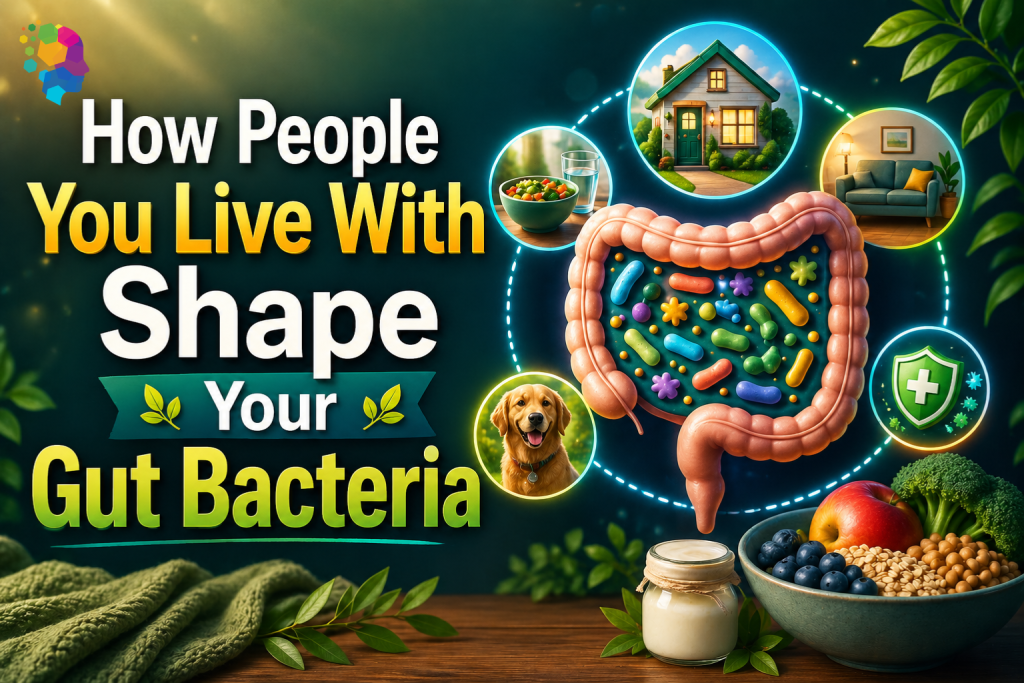
People living in the same household constantly exchange microbes. This happens through physical contact such as handshakes and hugs, shared surfaces like furniture, utensils, and bathrooms, and even airborne particles.
Over time, these small exchanges lead to noticeable similarities in gut bacteria composition.
Studies show that couples tend to have more similar gut microbiomes than strangers. Children share many microbes with their parents, and even roommates can influence each other’s microbial diversity. This suggests that the gut microbiome is partly a shared biological environment, not just an individual trait.
Pets also play an important role in microbial transfer. Dogs, for example, bring environmental microbes from outside into the home, increasing microbial diversity which is often linked to better immune health.
Why This Matters for Health
The composition of the gut microbiome is closely linked to several health conditions including Obesity, Type 2 Diabetes, Depression, and Irritable Bowel Syndrome.
If people in the same household influence each other’s microbiome, it means health risks and benefits may also be shared more than we realize.
For example, a household with healthy dietary habits may promote beneficial bacteria among all members, while poor lifestyle patterns can spread negative microbial effects.
The Role of Environment and Lifestyle
Living together does not just transfer microbes, it also shapes habits that affect the microbiome such as shared meals, hygiene practices, sleep routines, and stress levels.
These shared behaviors reinforce microbial similarities over time.
Can You Improve Your Microbiome Through Your Environment
Yes, and it goes beyond personal choices.
You can support a healthier gut microbiome by eating diverse fiber rich foods, maintaining a clean but not overly sterile environment, spending time outdoors, and living with individuals who have healthy lifestyles.
Even small changes in your environment can gradually influence your microbial ecosystem.
Conclusion
The idea that our gut bacteria are shaped only by what we eat is incomplete. In reality, our microbiome is deeply connected to the people around us.
From family members to pets, the organisms we carry are constantly interacting and evolving together. In many ways, health is not just individual, it is shared.
Understanding this hidden connection opens new perspectives on disease prevention, lifestyle choices, and the biology of human relationships.
Editor: Ayesha Noor