

The Hidden Link Between Epigenetics and Cancer
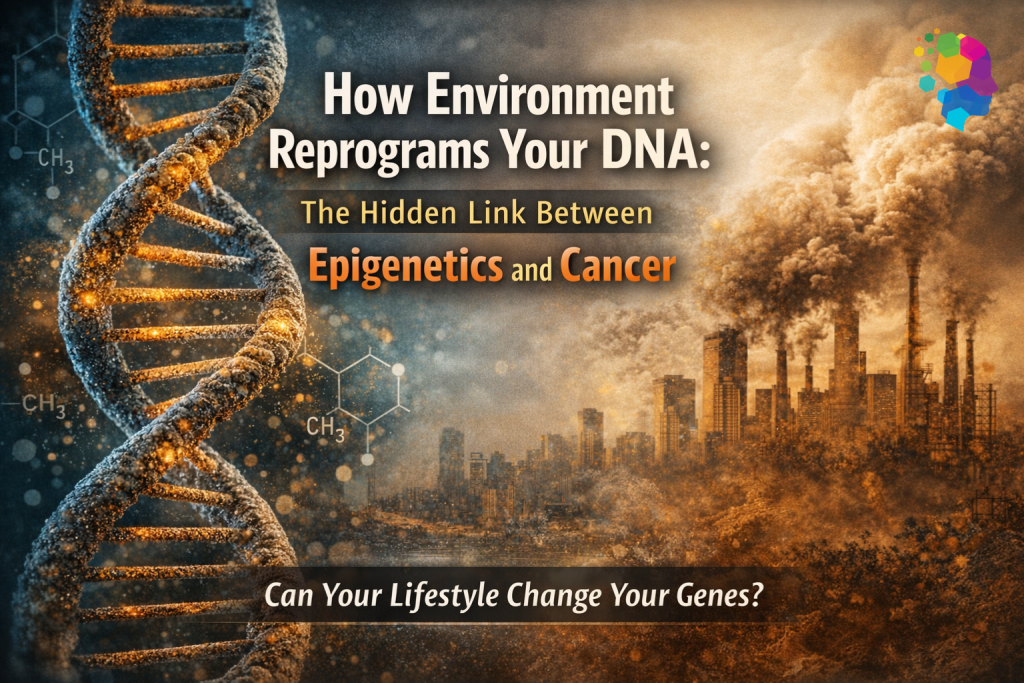
Introduction Can Your Environment Control Your Genes
What if your DNA is not fixed What if your environment lifestyle and even stress levels could influence how your genes behave
Modern research in epigenetics shows that DNA activity is dynamic and responsive rather than completely fixed. This breakthrough has become one of the most important shifts in modern biology, changing how scientists understand health, disease, and human development.
As explored in Future of Chemistry, rapid scientific advancements are continuously reshaping our understanding of molecular systems and biological processes.
What Is Epigenetics
Epigenetics is the study of how gene activity changes without altering the actual DNA sequence.
Instead of modifying genetic code, epigenetic mechanisms control how genes are expressed. This means genes can be switched on or off depending on biological signals and environmental influences.
These processes are closely linked with molecular interactions such as oxidative stress, where small chemical changes can trigger significant biological effects.
How Environment Impacts DNA
One of the most important discoveries in modern biology is that the environment plays a direct role in gene expression.
Factors such as pollution, diet, stress, and chemical exposure can influence how DNA behaves inside cells.
For example, research in environmental chemistry demonstrates how external substances interact with biological systems at the molecular level. You can explore similar environmental innovations in From Pollution to Product The New Chemistry Turning CO₂ into Cash, where chemical processes are used to transform harmful emissions into useful products.
This connection highlights how environmental exposure can indirectly affect cellular stability and genetic regulation.
Epigenetics and Cancer The Critical Connection
Cancer is no longer viewed only as a result of DNA mutations. It is now strongly associated with epigenetic changes.
In normal conditions, the body maintains balance through tumor suppressor genes that regulate abnormal cell growth. However, environmental and internal factors can disrupt this balance, leading to harmful gene activation or suppression.
This disruption can result in uncontrolled cell growth, a defining characteristic of cancer.
Understanding these mechanisms is essential in modern scientific research, where complex biological systems are studied through structured and interdisciplinary approaches.
Can DNA Changes Be Reversed
One of the most significant findings in epigenetics is that these changes are not always permanent.
Unlike genetic mutations, epigenetic modifications can sometimes be reversed through lifestyle changes, targeted therapies, and medical advancements.
This aligns with the broader idea of preventive science and sustainability, as discussed in A Sustainable Mindset for Saving the Planet, where long-term thinking influences outcomes.
Why This Research Matters in 2026
Epigenetics is becoming one of the most important fields in biology because it connects environment, genetics, and lifestyle into a single system.
It explains why individuals with similar DNA can experience different health outcomes and provides new pathways for early diagnosis and treatment.
This evolving understanding also connects with broader scientific innovations highlighted in Chemistry at the Edge of the Future 10 Discoveries That Could Change the World.
Future Scope
By 2030, epigenetics is expected to play a major role in predictive medicine, personalized treatment, and early disease detection.
Researchers are moving toward a future where diseases can be identified and managed at the molecular level before symptoms appear, transforming healthcare into a proactive system rather than a reactive one.
Conclusion DNA Is More Dynamic Than We Thought
DNA is no longer seen as a fixed blueprint. Instead, it is a responsive system that continuously interacts with the environment.
Epigenetics reveals that biology is shaped not only by inheritance but also by lifestyle, environment, and molecular interactions.
Understanding this hidden layer of genetic control opens new possibilities for disease prevention, treatment, and long-term health.
Editor: Ayesha Noor